
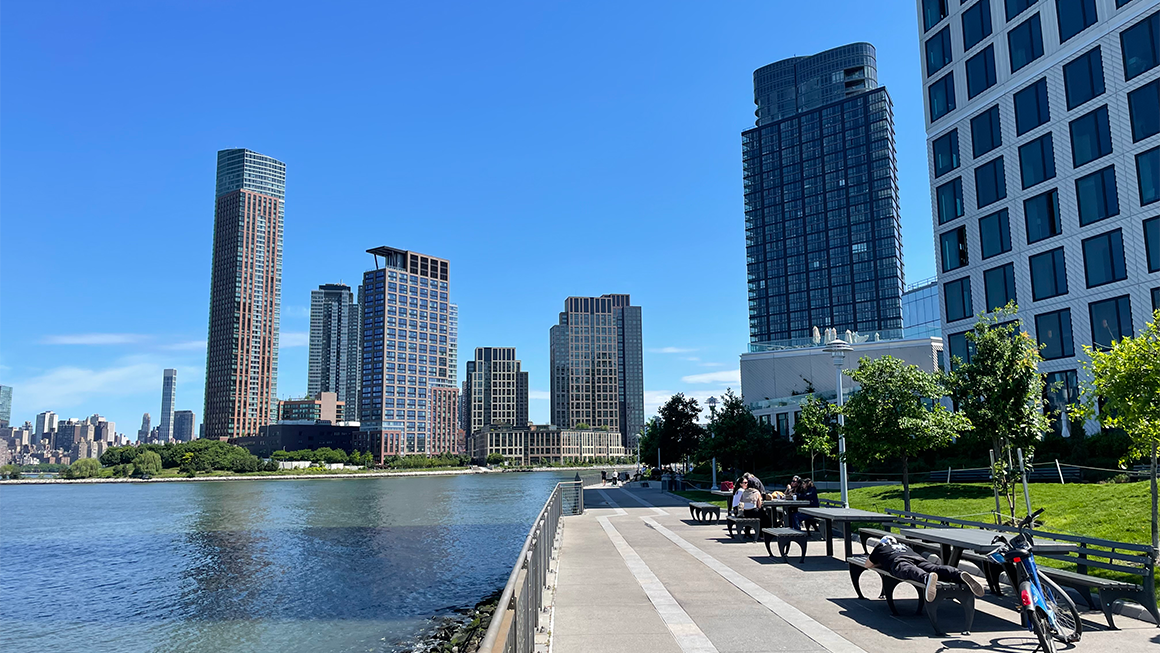
Walk around many of the nation’s downtowns and it’s clear that investment in apartment buildings has ramped up in recent years. Nationally, the US added more multifamily housing between 2021 and 2025 than any other time in the past 37 years.
In an earlier article, I showed that most recent housing construction in metropolitan areas has been concentrated on underdeveloped land, particularly in the Southeast and Southwest, continuing the trend over the previous two decades. This land lends itself to low- and medium-density development, like detached single-family subdivisions. But with multifamily housing construction also booming, it raises the question: Which areas have built the greatest concentrations of new homes?
Using neighborhood-level data of housing supply growth from 2020 to 2025, I find that centrally located neighborhoods in Brooklyn, Nashville, and Washington, DC, have added large quantities of housing, often very close to public transit stations. By adding housing in these neighborhoods, the cities enable residents to travel without a car, saving them money and reducing negative environmental effects.
High-density housing growth has rapidly transformed some communities
To pinpoint where housing supply growth has been most concentrated, I leveraged the US Census Bureau’s Address Count Listing Files, which provide information about the residential housing supply at the smallest census geography available (the census block), to create a standardized metric. These data offer frequently updated information about where housing is located and how many units are available over time.
With these data, I estimated the number of additional housing units added around every block in the US between 2020 and 2025. For each block, I identified all the other blocks within a half mile and calculated how the housing supply changed among that group of blocks. This aggregation allows me to compare areas that cover roughly the same land area—the half-mile circle surrounding each block.
Downtown Nashville Has Experienced Some of the Nation’s Most Concentrated Housing Growth Since 2020
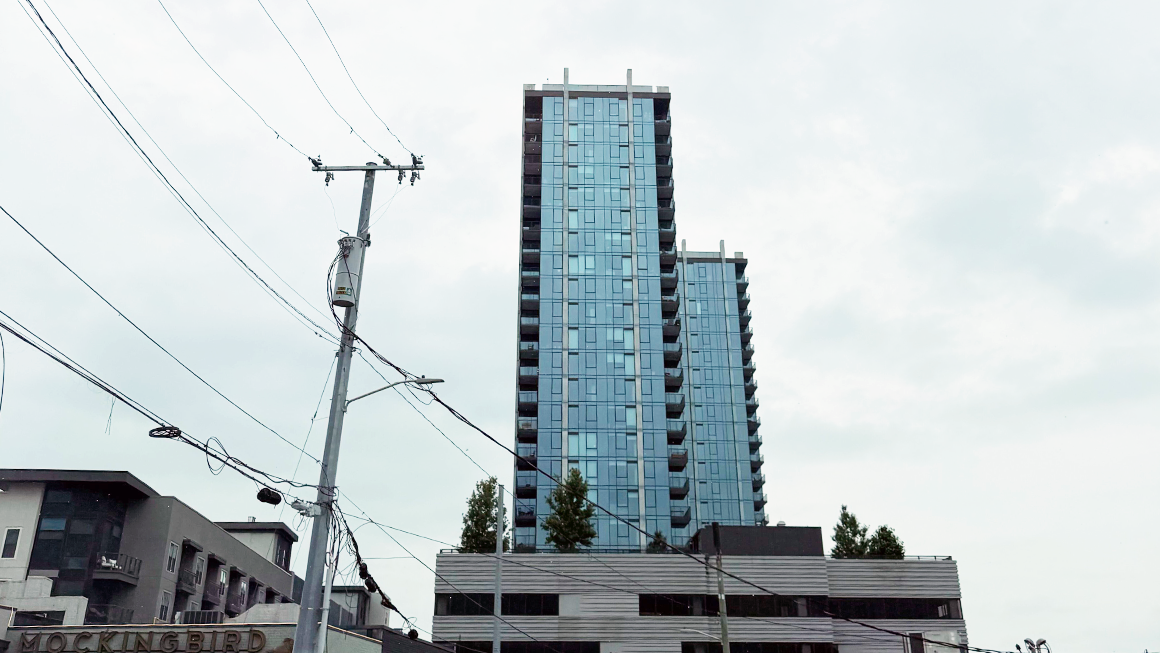
Source: Madeline Jenkins.
This process pinpoints exactly where housing supply is growing most quickly. Downtown Brooklyn, New York City, ranks highest. It features one block where more than 8,800 units were added within a half mile. Three other neighborhoods added more than 8,000 housing units in a half-mile radius: Washington, DC’s NoMa; downtown Nashville, Tennessee; and downtown Miami, Florida.
Source: Author analysis of US Census Bureau Address Count Listing Files, 2020 and 2025, at the block level (2020 geographies).
Notes: Shows highest value per county (e.g., Brooklyn features multiple individual locations with very high housing growth within a half mile, but many of those locations are within a half mile of one another, meaning their data are overlapping). A half-mile radius around a block point is equivalent to about 0.79 square miles.
While this process allows direct comparison, there are other ways to understand the totality of housing growth in an area. To take another approach, I developed an algorithm that identified growth clusters: groups of adjacent census tracts that all experienced rapid housing growth, defined as adding at least 2,000 housing units per square mile between 2020 and 2025.
This approach yields somewhat different outcomes. Downtown Nashville—encompassing the traditional business district and the surrounding areas—leads the nation, having added almost 25,000 housing units between 2020 and 2025. It’s followed by a large section of central Philadelphia, downtown Brooklyn, downtown Seattle, downtown Salt Lake City, and central parts of Miami, all of which added at least 17,000 housing units over that short time.
Source: Author analysis of US Census Bureau Address Count Listing Files, 2020 and 2025, at the tract level (2020 geographies).
Note: Neighborhood growth clusters are defined as groups of adjacent census tracts, each of which experienced housing growth of at least 2,000 housing units per square mile between 2020 and 2025.
Within these growth clusters, certain areas had particularly high levels of density added. The Greenpoint and Hunters Point waterfront neighborhoods (in Brooklyn and Queens, New York City) added housing at more than 16,000 units per square mile. Jersey City’s Journal Square and Seattle’s U District also had particularly high densities of housing growth.
What characteristics do fast-growing neighborhoods share?
Of the 70 largest growth clusters I identified, about half are in traditional downtown neighborhoods, areas that were previously occupied by office uses. The postpandemic weak office market has reinforced the downtown residential growth trend that was already at play in the 2010s. Less competition from office uses may make residential development more feasible. These neighborhoods offer residents a unique mix of uses and a walkable environment, which adds to their appeal.
Public-sector initiatives to reconstruct underdeveloped neighborhoods have also spurred concentrated construction zones. Washington, DC’s Navy Yard district and Portland’s Pearl District, each of which accommodated thousands of new homes over the past five years, were previously occupied by light industrial uses. In some cases, local governments implemented zoning changes to encourage higher densities, as we documented in Philadelphia, allowing thousands of new housing permits. In Chicago, the expansion of the downtown zoning area in 2016 has been associated with the creation of about 9,000 new housing units between 2020 and 2025.
Transit access has also influenced growth. Of the top 20 blocks by housing supply growth, 13 are located within two blocks of a metro or light rail transit station, and another 2 are located within two blocks of a commuter rail station. This suggests transit can effectively generate and support high-density growth, with public transportation able to absorb large numbers of people more easily than a car-focused mobility network.
Of note, the New York City region has been especially effective at generating concentrated housing development, with 19 of the 70 largest growth clusters in New York City itself and another 4 in the surrounding region. New York’s special character as the nation’s most densely populated major city, combined with its excellent transit access, makes it attractive to developers and residents interested in living in walkable, dense neighborhoods.
How can cities encourage housing supply growth in key areas?
National trends show continued, disproportionate housing development on greenfields, which are undeveloped agricultural or natural land often far from existing neighborhoods or public services. However, development is also occurring in more-concentrated areas like downtowns. These communities have been able to attract a steady supply of new apartment units over the past five years because they can provide residents with walkable, mixed-use neighborhoods near jobs where they don’t have to rely on a car.
To further encourage the creation of these types of communities, cities should consider:
- Rezoning large downtown or downtown-adjacent neighborhoods to convert underused or monofunctional areas into dense, residential communities.
- Emphasizing public investments, such as in new affordable housing, parks, and community centers, in neighborhoods near transit.
- Improving quality of life by ensuring that concentrated growth neighborhoods are well landscaped, have plentiful tree canopy coverage, and offer comfortable places to walk and bike.
