Urban across the Country

Body

Urban’s researchers partner with state and local leaders to provide the evidence, tools, and support they need to improve lives and strengthen communities. This work includes strategic advising to translate research into action, program evaluations to measure effectiveness, and research and data analysis to inform decisionmaking. Our experts develop custom data tools and modeling to support equitable resource allocation and lead community-engaged research and convenings to ensure policies reflect local priorities.

Use this page to explore Urban’s work. Search by region to see examples of our research, and filter by evidence and products to narrow results by topic or type of work.

Dive deeper into your state and community with our data tools. View highlighted tools below, select “Data tools” under “Filter by Product Types,” or head directly to our data tools page.


Get Involved

State and community data tools

Explore our work by state
A tall crane extends over a wide and long stack of green, blue, and orange shipping containers as the sun rises.
For most Americans, the average costs associated with new tariff policies will outweigh the average projected savings from the One Big Beautiful Bill Act’s (OBBBA’s) tax cuts.
An elevated vantage point shows cars, busses, and people navigatinga street going through an urban setting dense with buildings and some trees.
Yonah Freemark, a housing and land-use expert at the Urban Institute, spoke with Governing about how the Low-Income Housing Tax Credit (LIHTC) program has been the nation’s most successful contributor to new subsidized housing units.
Photo of a woman in a wheelchair looking outside the glass doors of a medical facility.
To better understand what’s driving a decrease in claims and increase in denials, the Social Security Administration could invest more in the research and staff needed to study these trends.
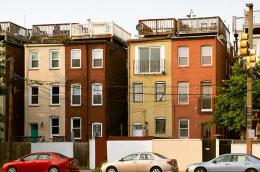
Row houses in Baltimore
Over the past 70 years, Baltimore has experienced population decline and disinvestment that has resulted in a high number of vacant properties. Through a whole-block redevelopment strategy, $3 billion in cross-sector investments, and strong community engagement, the city cut vacancy by 21 percent