Urban across the Country

Body

Urban’s researchers partner with state and local leaders to provide the evidence, tools, and support they need to improve lives and strengthen communities. This work includes strategic advising to translate research into action, program evaluations to measure effectiveness, and research and data analysis to inform decisionmaking. Our experts develop custom data tools and modeling to support equitable resource allocation and lead community-engaged research and convenings to ensure policies reflect local priorities.

Use this page to explore Urban’s work. Search by region to see examples of our research, and filter by evidence and products to narrow results by topic or type of work.

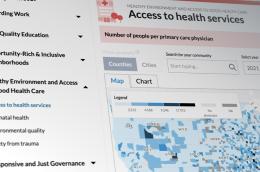
Dive deeper into your state and community with our data tools. View highlighted tools below, select “Data tools” under “Filter by Product Types,” or head directly to our data tools page.


Get Involved

State and community data tools

Explore our work by state
An image of a data set on a computer screen.
Third-party data offer a promising opportunity to help fill federal data gaps—but careful vetting and philanthropic investment is needed to address quality, accessibility, and governance concerns.
An Asian mother and daughter are selecting baby products at a shopping mall. The mother holds her child in her arms, carefully inspecting the material and quality of the items to choose the most suitable products for her baby.
When families with young children can’t afford basic hygiene products, caregivers are forced to make adverse trade-offs that can affect both their and their children’s health and well-being.
Research Report Black Family Thriving
Because most Black Americans live in the South, policies that aim to close the racial wealth gap will need to address factors related to the economic conditions in the South. In this report, we share key recommendations for wealth-building strategies for Black Americans, emphasizing state and local
Image of a map on the desktop.
When data disappear, we lose more than numbers—we lose the ability to see where inequities exist, to measure whether interventions are working, and to hold systems accountable.
A daycare educator sits on the floor with a child on his lap and other toddlers scattered around him as he reads them a story. They are each dressed casually and are focused on the book.
Hartford, Connecticut, models how cities can use data and community insights to inform strategies to improve child care and early learning systems.
School age kids talking to each other in class.
Social capital is a critical asset in the opportunity equation and a leading predictor of economic mobility. An estimated half of internships and jobs come through personal connections. Despite the clear evidence social capital helps students get ahead, neither education policy nor practice has