
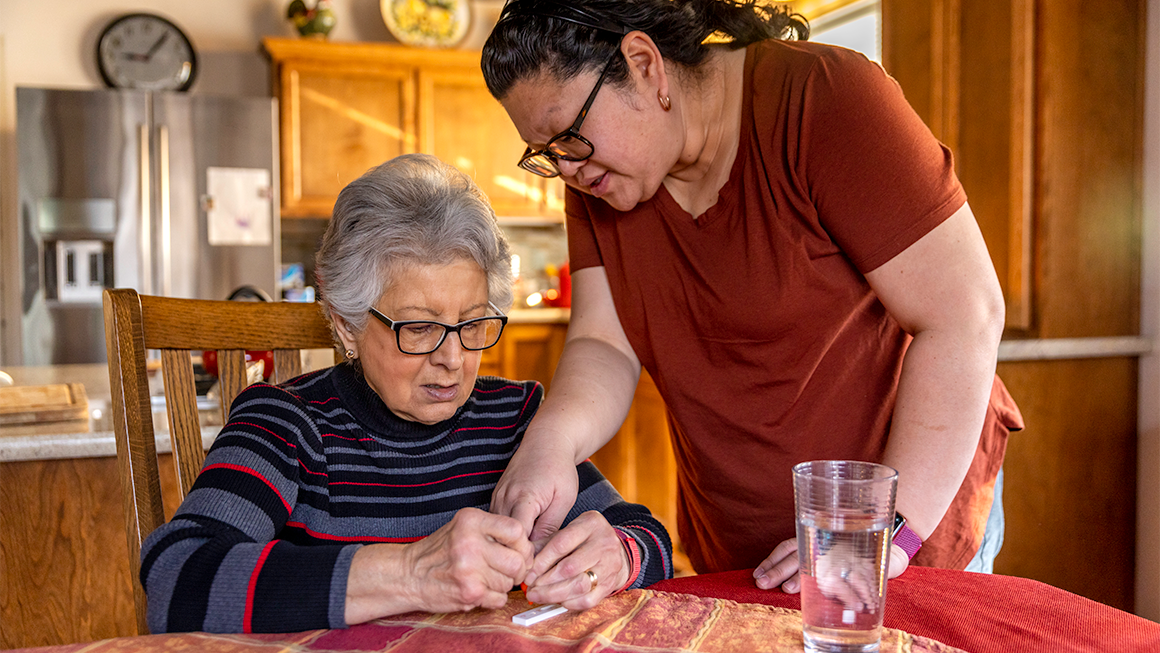
More than one in four (28 percent) direct care workers in the US are immigrants. They’re integral to supporting the long-term care and personal assistance needs of millions of older adults and people with disabilities across the US.
However, immigrants and their families are facing an array of policy changes that affect their ability to work and remain in their communities. This includes the US Supreme Court’s Mullin v. Doe (PDF) decision in June 2026, which permitted the administration to terminate Temporary Protected Status (TPS) for 1.3 million Haitian and Syrian immigrants living in the US. TPS is a lawful, humanitarian status that for decades has provided work permits and protection from deportation to people from certain countries facing political or environmental upheaval.
The Supreme Court’s ruling on TPS and other policy shifts reducing immigration and increasing enforcement could leave communities with even fewer direct care workers at a time when older and disabled adults across the US are already struggling to access the care they need to remain in their homes and communities.
Immigrants make up a substantial share of the direct care workforce in almost every state
Nationally, about 25 percent of the US population are people ages 65 and older or who have a disability. Although not all these people need supports, many have an elevated need for direct care services.
In a new analysis of the 2024 5-year American Community Survey (ACS), we find states where older adults and disabled people make up the highest share of the population are in the South and Northeast, with the largest shares in West Virginia (32 percent), Maine (32 percent), and Vermont (30 percent). Several other states have shares that surpass the national average (29 percent), including New Mexico, Kentucky, and Arkansas.
However, we find that the states with concentrations of older adults and people with disabilities don’t always have enough direct care workers to meet the need. The direct care workforce includes people who are home health aides, personal care aides, nursing assistants, registered nurses, and licensed practical and licensed vocational nurses.
Nationally, there are only about 35 direct care workers for every 1,000 older or disabled residents. This shortage reflects the challenge of hiring and retaining direct care workers given the low pay and high physical and emotional demands of the job. As such, people who need assistance may be left either relying on family or friends or going without adequate help.
Southern and predominantly rural states are facing particularly acute direct care workforce shortages. In Montana, 29 percent of residents are disabled or older adults, yet the state has only 20 direct care workers for every 1,000 older or disabled residents. Hawaii, Arizona, Alabama, and Florida have similarly large unmet needs for direct care workers.
Amid the growing direct care worker shortage, our analysis shows that immigrants are filling critical gaps in the direct care workforce in several states. In Nevada, where there are 18 direct care workers for every 1,000 older or disabled people, immigrants make up nearly a third (32 percent) of the direct care workforce. In Hawaii, which has a high share of older adults and disabled residents (27 percent) and a low supply of direct care workers for this population (20 for every 1,000), almost half of direct care workers are immigrants (49 percent).
Policy changes that remove immigrants’ authorization to work in the US would likely worsen the shortage of direct care workers across the US, with outsize effects on states where immigrants currently make up a large share of the direct care workforce.
Immigrants make up a large share of direct care workers in metropolitan areas with large shares of older adults and disabled residents
We also analyzed immigrants’ role in the direct care workforce by metropolitan statistical area and found immigrant direct care workers support communities with the highest potential need for direct care.
This is especially true in Florida. In the Naples metropolitan area, 38 percent of residents are older or disabled, and immigrants make up 57 percent of the direct care workforce. Similarly, in the Cape Coral metropolitan area, disabled or older adults make up 35 percent of residents, and immigrants are 54 percent of the direct care workers.
Metropolitan areas in California, Texas, and the Northeast could similarly face an increased shortage of direct care workers given recent federal policy changes ending lawful status and work authorization.
In addition, it’s important to note that immigrant direct care workers may not always live in the communities in which they work. They’re likely supporting people in need of direct care in multiple surrounding communities. So while this analysis shows where the people potentially in need of care services live, it doesn’t capture all communities that could lose workers.
How federal immigration policy changes could affect older adults, people with disabilities, and their families
Even before the Supreme Court’s TPS decision (PDF), older adults nationwide were experiencing challenges finding long-term care and personal assistance. Further declines in the direct care workforce would leave older adults and people with disabilities with even fewer options to meet their health and personal care needs.
Many disabled and older adults prefer home- and community-based care, and the direct care workforce is critical to meeting this need. Research shows this type of care is less expensive than institutional care in nursing homes, allowing people to receive services in the comfort of their own communities and homes.
Older adults and disabled people who can’t find care may need to increase their reliance on family or friend caregivers. This care is often unpaid and can lead to caregiver burnout. Not having access to care also puts disabled people, older adults, and their families at risk of material hardship, as family members often need to leave the workforce to provide care.
As changing immigration policies affect immigrants’ participation in the direct care workforce and residents’ access to care, states and localities can identify unmet needs by monitoring the effects on their communities. This can include ensuring that direct care workers and their family members are aware of their rights and providing guidance to workplaces and households (PDF) whose trusted caregivers’ stability is at risk. To address these challenges, federal policymakers could provide work authorization and pathways to citizenship for direct care workers, develop new pathways to green cards for workers, or allow states or localities to sponsor worker visa programs. More broadly, policymakers could focus on raising wages and increasing worker protections to attract more US-born workers and improve retention for all direct care workers.
The original version of the map erroneously shaded each state based on the number of direct care workers per 1,000 disabled or older people (corrected 10/16/2026).
