
Every 10 years, the census population count lays the foundation for congressional representation and the allocation of federal funding, but it’s also fundamental to evaluating the impact of public investments on people's lives. One of the census’s most important functions is equipping policymakers to determine whether public investments are improving people's lives.
The census serves as the foundation for much of the broader federal statistical system, and US Census Bureau estimates help allocate more than $2.8 trillion in federal funding to states and localities each year. Additionally, many federal and state surveys that are used to understand the country’s well-being rely on census data to construct sampling frames and population weights. All in all, census data support decisions (PDF) made by governments, researchers, businesses, community organizations, and individuals.
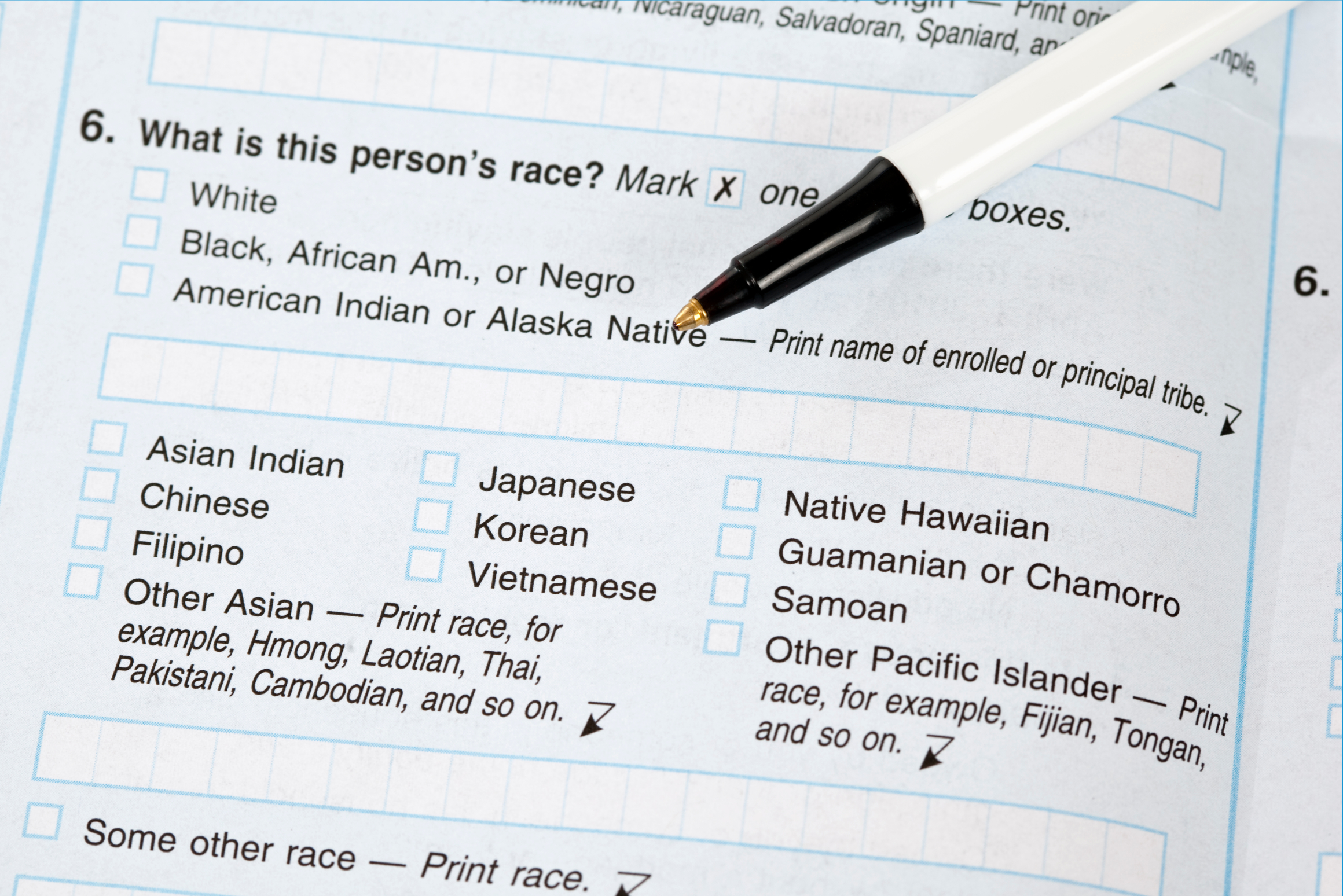
However, proposed decennial census changes would hinder this work. These changes would exclude noncitizens other than lawful permanent residents from congressional apportionment counts, redefine “usual residence,” remove questions about race and ethnicity, and prohibit the addition of questions about sexual orientation. Together, the changes could alter who is included in population counts and the demographic information required to see whose outcomes are improving.
If either the population count or demographic variables change substantially or are no longer collected, it undermines the accuracy of any comparison across people and places and over time.
How do inaccurate counts affect policymakers?
The decennial census helps policymakers and researchers track progress on countless community measures over time, by place, and across demographics. Policymakers rely on census-derived population estimates to answer questions like: Where should new schools open? How many firefighters should be assigned to the firehouse? Where should the next business corridor be built? These answers require knowing how many people actually live in the community. For example, counting a neighborhood’s total number of school-age kids allows the school district to see who needs to enroll. Counting the total number of houses allows housing agencies to see which units can be rented.
When policymakers and researchers want to understand how these counts, and related health and economic outcomes, vary by group, they turn to the demographic data collected from the census, such as race and gender. People’s daily lives depend on these calculations and subsequent policy decisions, which all stem from an accurate census.
Changes to census residence criteria and to demographic questions alter who is included in the population and how that population is classified. As a result, policymakers may no longer be able to confidently answer common questions about homeownership, educational attainment, poverty, and workforce trends. They would not know if observed changes reflect real progress or simply differences in measurement.
Consider a city that has invested heavily in expanding access to early childhood education. Local leaders may track preschool enrollment rates by income, neighborhood, race, or other characteristics to determine whether all eligible children are receiving services and whether disparities are shrinking over time.
Imagine if before the investment, the census showed that 100,000 children were old enough to enroll early education, most of whom were white. In later years, 105,000 children were in the right age group, and the race and gender makeup of students had changed. But when the city goes to measure progress, the census would have excluded noncitizens and questions about race. So the numbers could look like they stayed at 100,000, and the city wouldn’t have enough child care slots for all children who need them. Child care administrators couldn’t confidently compare the latest number to the original and would have no idea if they successfully increased access for children across neighborhoods or racial backgrounds.
The same challenge arises in housing policy. Homeownership rates by race are among the most widely used indicators of economic opportunity and wealth building. Local governments, housing agencies, and community organizations use these data to evaluate down payment assistance programs, first-generation homebuyer initiatives, fair housing efforts, and other interventions designed to expand access to homeownership. Changes to who is counted or how people are counted relative to the demographic groups they identify with could make it more difficult to determine whether observed changes reflect successful policies, population shifts, or statistical discontinuities.
A murkier picture of progress will also hurt elected officials’ ability to attract new employers and industries, which want to see that a region can offer quality housing and education for their workforce. Employers, as well as local, state, and federal policymakers, use census counts as the basis to track progress over time in their area and compare themselves with similar areas across the country.
Proposed census changes would threaten the ability to test policy outcomes
Changes to the census then come with particularly high stakes and would test the idea of federalism, a fundamental principle of shared governance in the US. Via executive orders and recent legislative decisions, the federal government has shifted more decisionmaking responsibility to the states when it comes to delivering disaster relief, offering affordable housing, and running an already decentralized system of education. As states take on this responsibility, their decisions require clear, consistent, and accurate data.
Even in areas where states inform federal work, rather than the other way around, census data are crucial. State experiments—whether universal health care in Massachusetts, universal child care in New Mexico, state-funded education vouchers in Arkansas, or upzoning for affordable housing in Washington—require a reference point to evaluate how well people were doing at the start and to see how much their outcomes improved.
Such innovations require funds, which are predicated on having correct total population count forecasts. For example, if the proposed revisions to residence criteria result in fewer college students being counted toward a town’s population than in previous decades, they might be allocated less federal and state funding, and local leaders might incorrectly forecast less tax revenue or spending in their communities than would take place, which could limit their policy experimentation.
Changes to the census compromise evidence-based policymaking at all levels
No other data source provides the same combination of national coverage, geographic detail, and long-term comparability as the census. Changes to census definitions and demographic measures could fundamentally alter the baseline against which the nation measures social and economic progress, compromising the ability to advance evidence-based policies at all levels of government.
For generations, policymakers have relied on census data to understand how communities are changing and whether public investments are producing results. Preserving that ability is essential to effective governance.
