
As the media revisits its monthly project of over-analyzing today’s new jobs numbers, it’s worth remembering—again—that 165,000 new jobs is just the first estimate and is likely to get substantially revised. In two months, the final revision to April’s numbers will come out and may well paint a different picture.
Last month's March estimate of just 88,000 new jobs was greeted with consternation and worry, and it's already been revised up by 57 percent to 138,000.
As the interactive chart below shows, the difference between the first and final estimates of jobs changes is often quite large—enough to change the headlines, in fact. On average since January 2007, the difference between the first and final numbers was 70,000 jobs (compared with an average increase or decrease of 230,000 jobs). In the ensuing 73 months (to April) for which we have final revisions, the revision differed by more than 50 percent of the first estimate 27 times. In 18 of 73 months, the revision differed by more than 100 percent of the first estimate. In 20 of 73 months, the magnitude of the difference was greater than the magnitude of the first estimate.
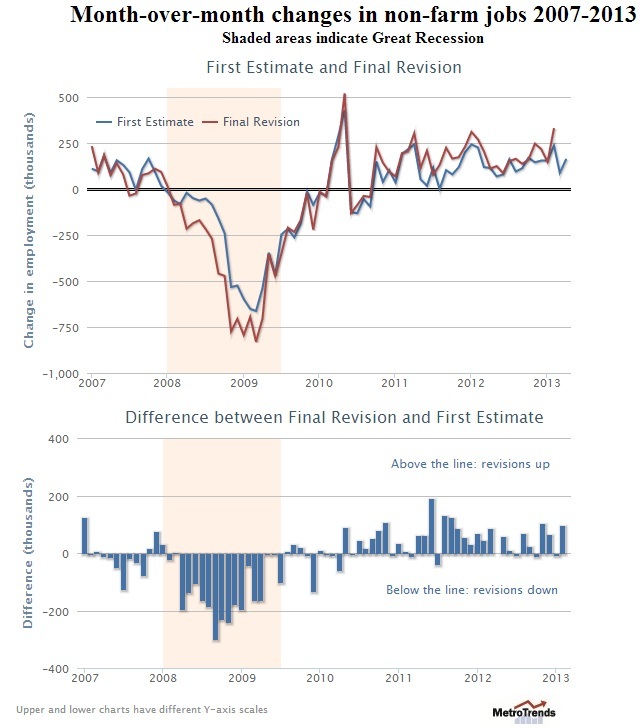
Having said that, these monthly job estimates—as preliminary as they are—still give policymakers a rough idea of what’s going on. The first estimate is highly correlated with the final revision and only rarely (twice in the past 73 months), has the revision reversed the direction of the change in jobs (turning job losses into job gains or vice versa).
As I noted last month, measuring changes in the macroeconomy is quite difficult and quite important in terms of making policy. Having this early glimpse into unemployment trends is far superior to knowing nothing at all.
Let’s help communities build more secure, hopeful futures.
Today’s complex challenges demand smarter solutions. Urban brings decades of expertise to understanding the forces shaping people’s lives and the systems that support them. With rigorous analysis and hands-on guidance, we help leaders across the country design, test, and scale solutions that build pathways for greater opportunity.
Your support makes this possible.
