

Early childhood educators have historically received low wages and poor employee benefits (PDF). In 2022, the median hourly wage for such workers was $13.07. As a result, child care businesses struggle to attract and retain educators, creating a child care shortage in the US.
Federal legislation gives state Child Care and Development Fund (CCDF) lead agencies the flexibility to create child care policies that best meet the needs of the families in their communities. The CCDF Final Rule published in May 2026 reduced federal regulations and gave states even more bandwidth to choose their own child care policies. This flexibility brings an opportunity for states to innovate on new strategies for addressing the child care shortage.
One emerging strategy is offering guaranteed child care assistance to early educators who are parents. Just as the child care system needs these educators to meet demand, educators who are parents need affordable child care to be able to work and support their families. According to our analysis of the 2024 National Survey of Early Care and Education (NSECE), an estimated 43 percent of early educators in child care centers have at least one child younger than 12 in their household. This totals about 582,321 workers nationwide. And of that group, 50 percent have at least one child under 5.
Nearly Half of Early Educators in Child Care Centers Have a Child Under Age 12 at Home
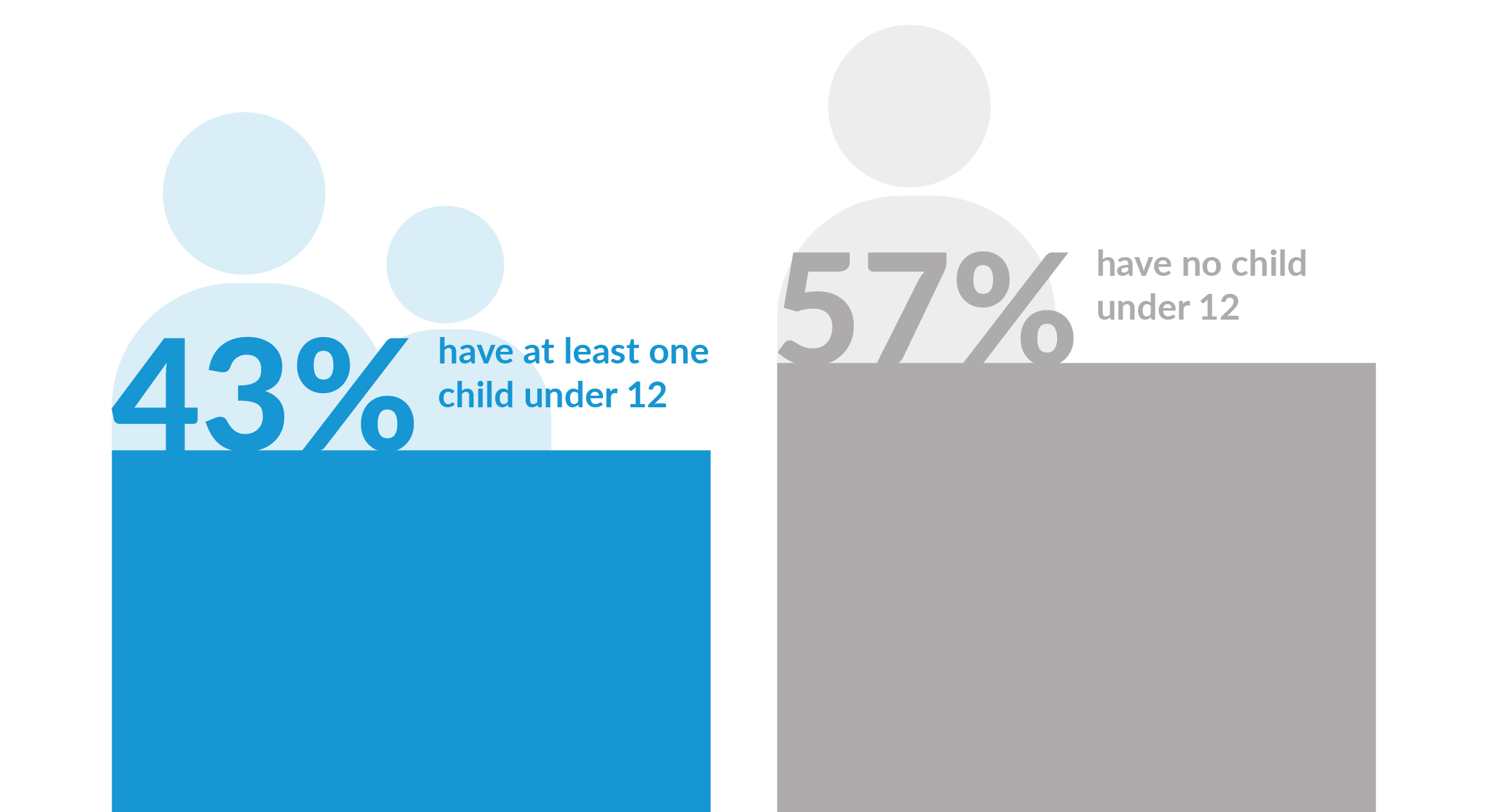
Source: Authors’ analysis of the 2024 National Survey of Early Care and Education public-use center-based workforce survey data file.
Yet fewer than half of early educators with at least one child under age 12 receive child care subsidies or have a child enrolled in a publicly funded early education program, such as state prekindergarten, preschool, or Head Start. Parents with only school-age children (ages 6 to 12) were the least likely—compared with parents of at least one child under 5 and parents of at least two children under age 12—to access child care subsidies.
Policies that make child care more affordable for parents working in the child care system could be widely beneficial. They could not only stabilize the child care workforce, but could also increase the supply of care, improve workers’ financial well-being, benefit child care businesses, and enhance the quality of care children receive. In this article, we highlight states that have implemented these policies and provide additional detail on their potential impacts.
To address supply challenges, several states have made early educators who are parents eligible for child care subsidies
In 2022, Kentucky (PDF) was the first state to pass legislation making child care more affordable for early educators. It made workers in licensed child care centers and certified homes who have children automatically eligible for state child care subsidies based on their employment and regardless of income. A 2023 report estimated 400,000 workers nationwide who are parents with children under 13 could benefit if all states took up a similar policy.
Since then, several other states have passed similar legislation or implemented pilot programs to expand eligibility for subsidies so they’re accessible to most or all early educators needing child care.
- A pilot program in Rhode Island, launched in 2023, made child care free for early educators who work 20 hours or more a week and have family incomes up to 300 percent of the federal poverty level.
- A 2024 Arkansas policy made early educators who work in licensed programs for 30 hours or more a week categorically eligible for the state’s child care subsidy.
- A pilot program in Maine, launched in 2024, reduced child care costs for early educators who work 20 hours or more a week and made them categorically eligible for the state’s child care subsidy program.
- A North Dakota policy, approved in 2023 and implemented in 2025, made early educators who work 25 hours or more a week categorically eligible for the state’s child care subsidy and maximum reimbursement rate.
- In April 2026, Iowa (PDF) passed a policy that made early educators who work 32 hours or more per week categorically eligible for the state’s child care subsidy.
Early childhood educators, businesses, and families benefit when educators have access to affordable child care
Making more early educators eligible for free and subsidized child care can have system-wide benefits. Educators and their families gain access to affordable care, businesses can hire and retain staff that keep them up and running, and other families benefit from a greater, higher-quality supply of care.
Early childhood educators who are parents. Child care subsidies can promote parental employment and families' access to stable, quality care. They supplement early educators’ income, which can help them afford day-to-day expenses. Child care subsidies also make these educators’ wages on par with or higher than retail and hospitality wages—two industries that typically pay more but don’t require educational credentials.
This is important because data from the 2024 NSECE show that 46 percent of early educators who are parents rely on public safety net programs, such as the Supplemental Nutrition Assistance Program. The data also show that 55 percent of early educators recently looked for a new job or second job because of low wages, driving high turnover and poor child outcomes. Child care subsidies can be part of the solution to these challenges.
Child care businesses. The policies above boost child care programs’ ability to hire and retain early educators. They could also enable some programs that currently discount tuition assistance for their staff to stop doing so, and, in turn, their revenues may increase. The 2024 NSECE data show that 68 percent of center-based programs offer their early educators tuition assistance, yet less than half (47 percent) of those centers don’t offer health insurance.
Programs may be able to use the additional revenue they receive through subsidies to increase wages or offer other benefits, like health insurance. In fact, early evidence (PDF) from Kentucky indicates that, because of its eligibility expansion, child care programs were more effective at recruiting and retaining early educators, and child enrollment increased because programs were able to increase their staff size.
Families. Policies that expand early educators’ access to child care subsidies may also promote higher-quality care for more children. Children newly enrolled in subsidy programs gain access to more child care options and potentially high-quality settings. They also experience more continuity in their early educational experiences when educators stay in their positions longer, which is especially important for young children’s development.
While initial evidence is positive, more evaluations of these expanded eligibility policies—and other state strategies to build and sustain the child care workforce and care supply—are needed. They can offer additional evidence of impacts policymakers can use to craft programs and policies that strengthen every part of the child care system.
