
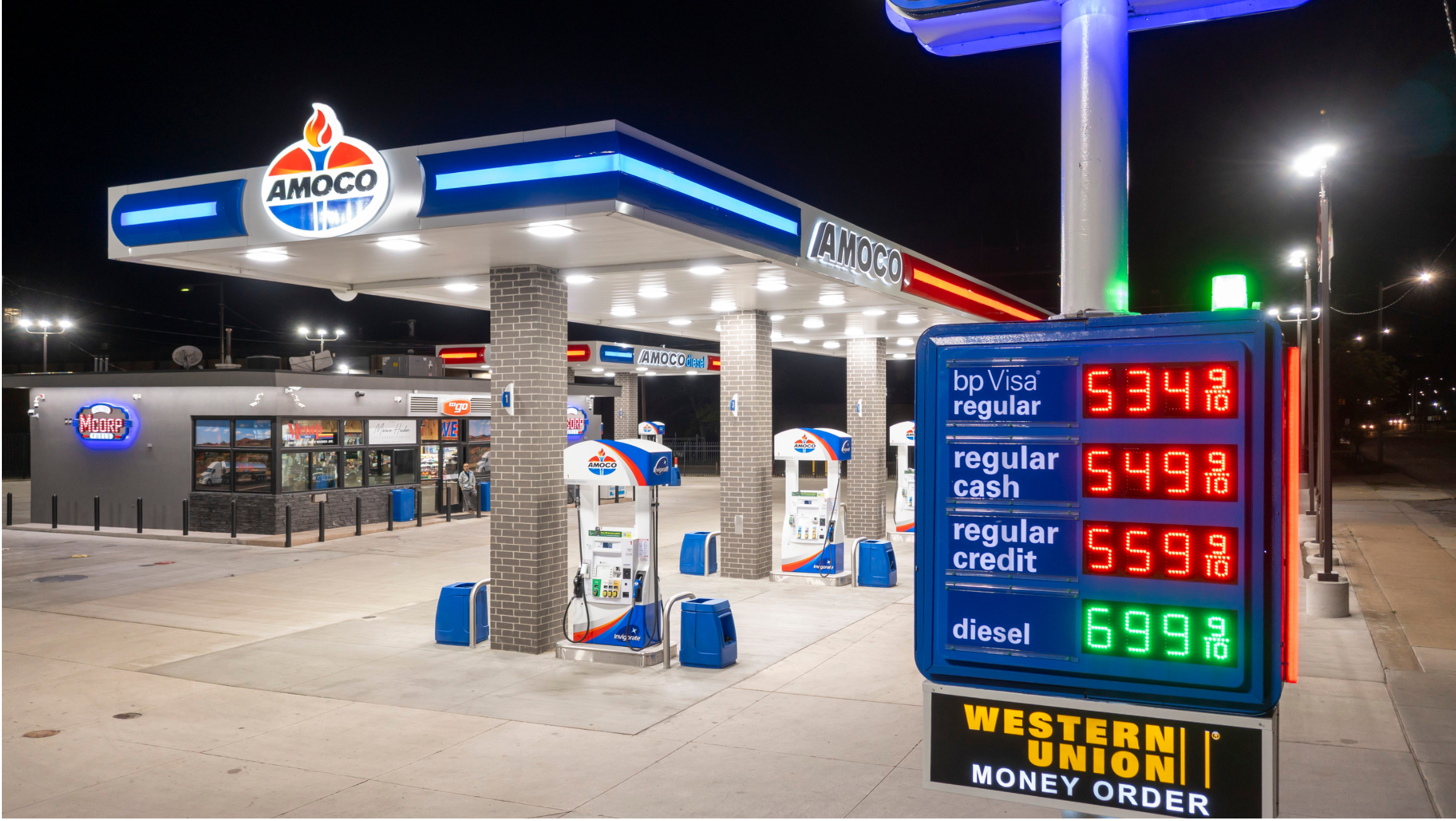
Costs of living, including housing, utilities, insurance, child care, and more, have increased dramatically in recent years. But for many Americans, the most tangible hit to their wallets has been steadily rising gas prices.
Over the past nine months, gas prices have crept upwards, largely because of the United States’ war against Iran. A typical driver spends $65 more on fuel each month today than they did a year ago. In 12 states, the average driver spends at least $80 more monthly than they did a year ago, including states with competitive congressional races this fall, like Michigan. Families driving the nation’s most popular vehicle, a Ford F-150, spend $85 more on gas each month than they would have last year.
Sources: Author’s calculations based on annual vehicle miles by state, Federal Highway Administration Highway Statistics (2024); licensed drivers by state, Federal Highway Administration Highway Statistics (2024); fuel prices, AAA (September 28, 2026).
Note: Based on assumptions that a typical driver drives 1,145 miles per month and that the typical car has a fuel efficiency of 23.4 miles per gallon, each based on nationwide average.
The mandate is clear: Policymakers must address this affordability challenge. In the short term, state governments can reduce the strain of high gas prices by working with employers to encourage more work from home. In the long term, Congress can invest in more transportation options, such as public transit and bike lanes, to give people alternatives to driving. However, the US House of Representatives’ proposal for the current surface transportation reauthorization bill would cut future federal transit funding by 23 percent. At the same time, state and local policymakers can incentivize transit-oriented development and vehicle electrification, both of which can reduce how much gas prices affect people’s wallets.
Cost pressures from higher gas prices vary by household income and car type
Nationwide, gas prices have risen from about $3.13 a gallon in September 2025 to $4.48 a gallon in late September 2026, according to AAA National Average Gas Price data. The last time prices were this high was in mid-2022. Today, a typical 24-gallon tank fill-up costs more than $107, a 43 percent increase compared with last year. (Diesel prices have increased even more dramatically.)
Those costs add up. The typical licensed American drove almost 14,000 miles in 2024, about 1,100 miles a month. Assuming they were driving a typical vehicle, which gets about 23.4 miles per gallon, then they spent about $65 more on gas each month than they would have last year, or almost $800 annually. That’s a big chunk of their spending money, gone.
This situation is particularly difficult for the families with low incomes who depend on cars to get around. Our previous research shows that transportation accounts for up to 25 percent of total expenditures for households with vehicles and very low incomes, far more than families with higher incomes. Those with access to effective public transportation options can reduce their costs substantially.
But how much a household pays, and how much they can reduce those costs, largely depends on what kind of car they drive. Those driving a hybrid Toyota Camry, the most popular sedan, get about 51.2 miles per gallon. At current prices, they get 7.5 more miles per dollar spent than those with an F-150. People who have a fully electric vehicle get an even better deal, paying far less to charge their cars. And people who take public transit, walk, or bike can avoid fuel costs altogether.
Price increases have not affected states equally
People’s exposure to high gas prices also depends on where they live. In California, fuel costs about $6.37 per gallon as of September 28, compared with $3.92 per gallon in Texas. Over the past year, Michigan has the largest increase (up $1.65 per gallon), while Indiana has the smallest (up $0.79 per gallon).
People’s driving habits also differ by state. The typical licensed driver in Wyoming drove almost 1,800 miles per month in 2024. However, the typical driver in Rhode Island or Washington, states where destinations are closer together and people are less dependent on cars, drove just 800 miles per month.
Sources: Author’s calculations based on annual vehicle miles by state, Federal Highway Administration Highway Statistics (2024); licensed drivers by state, Federal Highway Administration Highway Statistics (2024); fuel prices, AAA (September 28, 2026).
Note: Estimated monthly gas costs are calculated for a typical 23.4 miles per gallon car that drives the average mileage per state.
As such, how much more a driver pays at the pump each month depends on where they live, what car they drive, and how far they drive. F-150 drivers in Alabama, Kansas, Kentucky, Mississippi, Missouri, New Mexico, Oklahoma, Utah, and Wyoming typically drive more in their less fuel-efficient cars, meaning they will spend at least $110 more on gas monthly than they would have a year ago. (That said, they may cut back on how much they drive because of increased costs, which could affect their quality of life.)
On the other hand, hybrid Camry drivers in Alaska, DC, Hawaii, Oregon, and Washington typically take shorter trips in a more fuel-efficient vehicle, so their monthly fuel costs will increase by less than $20 monthly compared with a year ago.
Sources: Author’s calculations based on annual vehicle miles by state, Federal Highway Administration Highway Statistics (2024); licensed drivers by state, Federal Highway Administration Highway Statistics (2024); fuel prices, AAA (September 24, 2026).
Note: Based on assumption that gas prices were stable across September 2025 and 2026.
Policymakers can support a more affordable and environmentally sustainable transportation system
Over the short term, policymakers have limited opportunities to intervene. People cannot simply buy a new car when they can’t afford one, nor can they use public transit that doesn’t exist.
Even so, policymakers can improve the lives of people without other travel options right now. Though not all jobs can be conducted remotely, the International Energy Agency recommends increasing the share of people working from home and people taking transit, and policymakers can work with employers to encourage this change until transportation costs decline again. For employers that aren’t located in transit-accessible areas, remote work options could give car-dependent people financial relief and reduce gas consumption overall.
Another option is to reduce driving speeds. During the 1970s, the United States reduced speed limits, with the intention of reducing the public’s use of oil. Similar changes today, combined with effective enforcement, could reduce demand for gas.
Policymakers should pursue a series of long-term strategies to reduce Americans’ exposure to high gas prices, including:
- Investing in public transportation options in the federal transportation reauthorization bill. When other transportation options are available, people can meet their daily needs without a car. Rather than cutting funding for transit, which Congress recently proposed, federal policymakers should expand investment in bus and rail systems, plus improved pedestrian and bicycling infrastructure, nationwide.
- Coordinating transit-oriented development. Housing built with public transportation options in mind can help people live and work in communities without needing a car. Policymakers at the state and local levels can develop plans to rezone neighborhoods for higher densities and leverage public land for projects in areas close to transit.
- Electrifying the transportation system. This summer, electric vehicle sales took off abroad, accounting for more than 30 percent of new car sales in France, Germany, and the United Kingdom, far more than in the United States. Investing in electric vehicle options can deprioritize gas usage; however, Congress eliminated relevant electric vehicle tax credits in 2025.
- Increasing fuel efficiency requirements for new cars sold. The Trump administration has proposed reducing fuel efficiency standards, which would strip the incentive for automakers to sell more fuel efficient, affordable cars.
Ultimately, until the US invests in greater public transportation and noncar transportation options, rising gas prices will continue to burden drivers and their families, especially those who can least afford it.
