
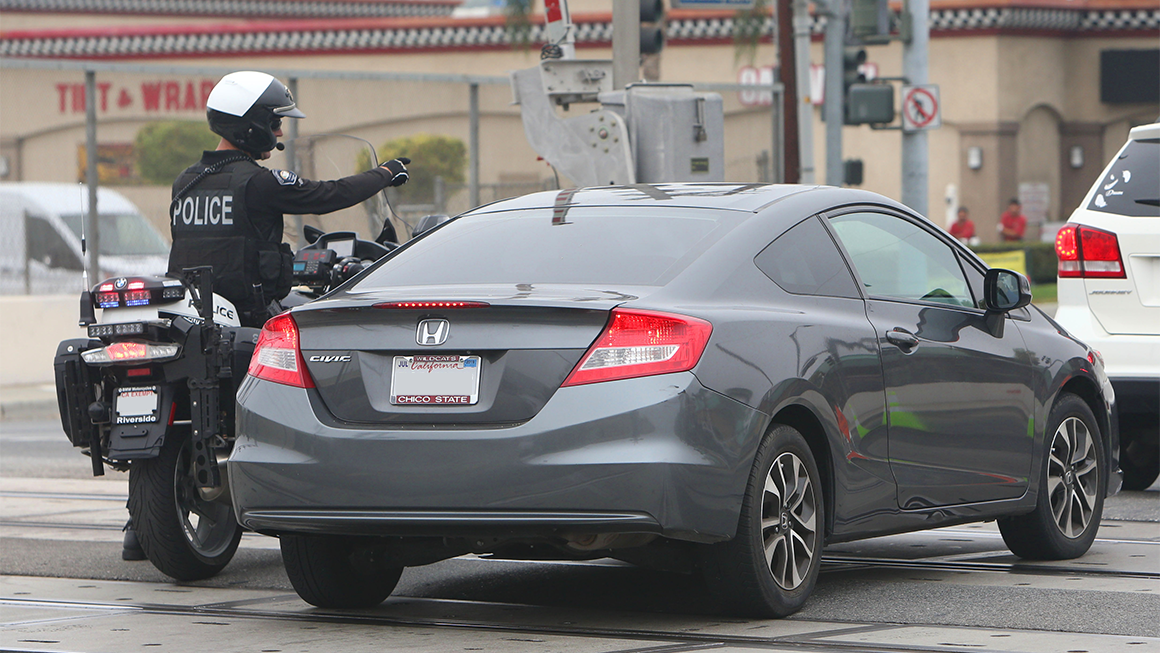
A rise in traffic fatalities across cities during the pandemic shone a national spotlight on road safety. Despite steady declines in recent years, communities are still working to reduce fatality rates. Improving traffic safety is critical, yet emerging research suggests one of the most common strategies to do so—police traffic stops—may not be effective. In fact, reducing nonsafety police traffic stops may improve safety for both drivers and officers.
Traffic stops serve many purposes: addressing reckless and dangerous driving that compromises road safety (such as speeding), enforcing regulatory issues that typically pose no road safety threats (like expired tags and equipment violations), and as a pretext to search for criminal activity like drug or weapon possession.
Extensive research shows regulatory stops and pretextual stops do little to improve road safety and do not effectively reduce crime or help seize contraband. Nonsafety and pretextual traffic stops also drive racial and ethnic disparities in the criminal legal system. Multiple studies, including an analysis of 20 million traffic stops across the country, have found Black, Latine, and Native American drivers are stopped and searched more often than white drivers.
With careful design and implementation, policies that limit nonsafety and pretextual traffic stops can help improve road safety and reduce racial and ethnic disparities.
Evidence-based alternatives to nonsafety and pretextual traffic stops
Some localities are reprioritizing traffic stops to focus on dangerous driving and limiting nonsafety and investigatory pretextual stops. Research shows reprioritization can improve safety for drivers without sacrificing public safety (PDF) and reduce racial and ethnic disparities.
These policies vary across agencies, cities, and states, but they typically limit the types of traffic stops law enforcement officers can make. Some prohibit officers from conducting stops for equipment violations or documentation failures unless a moving violation is also occurring. Some also require data collection and reporting to support oversight and ensure compliance.
States and localities across the nation have adopted a range of policies limiting nonsafety and pretextual traffic stops through the following mechanisms.
- In 2022, Mecklenburg County in North Carolina ended traffic stops for certain moving violations based on advocacy from community organizations, including Forward Justice and NC Second Chance Alliance. These organizations used publicly available traffic stop data through NC CopWatch to show racial disparities in traffic stops to the sheriff’s office. Regulatory stops of Black drivers have declined since the implementation of the policy, but the overall effects are unclear. Forward Justice is evaluating the policy’s impact now using publicly available data.
- In 2022, Philadelphia passed legislation limiting certain traffic stops and required the police department to provide public traffic stop data. The Defender Association of Philadelphia initially advocated for these policies, and after the policy was implemented, it leveraged the publicly available traffic stop data to demonstrate that the policy has had no negative effects on road or public safety. However, the change has not reduced racial disparities in stops. The data-reporting requirements built into the policy were critical to assessing fidelity to the policy and its impact.
- In 2024, the San Francisco Police Commission enacted a San Francisco Police Department (SFPD) policy limiting pretextual traffic stops, following 2023 requirements to make all SFPD stop data accessible to the public and a 2024 California State law limiting pretextual stops. SPUR, a Bay Area community organization, collected and analyzed the newly publicly available traffic stop data and demonstrated the racial disparities present in traffic stops in San Francisco, and then used that information to advocate to the commission for a policy limiting pretextual traffic stops.
Barriers to limiting the spread of nonsafety and pretextual traffic stop laws
Despite their benefits, only 20 cities and counties across nine states have active policies that limit nonsafety traffic stops. Most of these are in states that already require traffic stop data collection and reporting (including reporting the person’s race and ethnicity). Six of these localities are in one of the nine states (California, Connecticut, Illinois, Maryland, New Jersey, New York, Ohio, Oregon, and Vermont) with an existing statewide policy related to limiting nonsafety traffic stops.
These policies also face ongoing resistance and risk. The misconception that recent declining traffic enforcement is responsible for increases in traffic fatalities during the pandemic have fueled pushback from law enforcement agencies, police unions, legislators, and community members. In some places, state and local laws prevent policies limiting traffic stops. In other cases, police departments and unions have prevented them from passing, pushed for repeal, or hampered implementation.
How to develop effective and sustainable policies limiting nonsafety and pretextual traffic stops
Localities nationwide face steep barriers to passing policies limiting nonsafety and pretextual traffic stops, and even when passed, these laws often fail to be implemented effectively. To strengthen community safety and reduce racial and ethnic disparities, state and local policymakers can consider the following steps when enacting and improving policies to limit nonsafety and pretextual traffic stops.
- Consider the legal obstacles and opportunities when drafting policies, such as existing state or local legislation that dictates what stops can be limited or how much power law enforcement agencies have to dictate their policies and practices. Once policymakers understand their policies’ legal context, they can carefully the policies’ content (PDF) and the best avenue to implement the policy (e.g., local statute, law enforcement agency policy).
- Collect and analyze traffic stop and related prosecution data (PDF) to understand the traffic safety and enforcement (e.g., why are people being stopped, where are stops happening, who is being stopped, what types of driving behavior is contributing to threats to road safety), identify the appropriate scope of the policy (e.g., what types of stops to limit), and evaluate the impact of the policy (PDF).
- Solicit buy-in from community members, other policymakers, police departments, prosecutors, and police unions and educate these communities when implementing the policy (PDF). Gaining as much local community buy-in as possible can help hasten policy adoption and safeguard against pushbacks once a policy is passed. Educating people about the value of these policies and bringing people to the table when developing the policy can help foster feelings of ownership and agency across groups to gain buy-in.
- Build compliance mechanisms into the policy, such as requiring police departments to collect and share data related to traffic stops and ensure there is a body that can be responsible for oversight and accountability, ideally independent of the police department.
- Consider complementary methods to increase road safety, such as street design and appropriate speed limits.
