Urban across the Country

Body

Urban’s researchers partner with state and local leaders to provide the evidence, tools, and support they need to improve lives and strengthen communities. This work includes strategic advising to translate research into action, program evaluations to measure effectiveness, and research and data analysis to inform decisionmaking. Our experts develop custom data tools and modeling to support equitable resource allocation and lead community-engaged research and convenings to ensure policies reflect local priorities.

Use this page to explore Urban’s work. Search by region to see examples of our research, and filter by evidence and products to narrow results by topic or type of work.

Dive deeper into your state and community with our data tools. View highlighted tools below, select “Data tools” under “Filter by Product Types,” or head directly to our data tools page.


Get Involved

State and community data tools

Explore our work by state
Research Report How a Work-Based Policy Package Can Reduce US Poverty
In this report, we use a microsimulation model to estimate the effects of a package of policies developed by the Community Advocates Public Policy Institute to encourage work and to reduce poverty. This report builds on previous work in this area and demonstrates the large antipoverty impact that a
An aerial view of a highway interchange.
The appointed and elected officials who sit on the boards of a large share of regional planning organizations rarely reflect the people they serve.
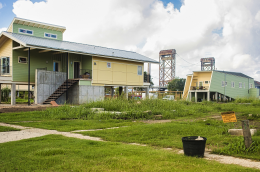
photo of house on stilts
Place-based data about how disasters have affected the Gulf Coast since Hurricane Katrina and the federal government’s role in managing extreme events.
A group of police officers in the middle of a street.
Despite a nationwide trend toward criminalizing people experiencing homelessness, decades of research show that housing resources and other supports remain the best solution to helping people exit homelessness.
Illustration with people, buildings and trees
We’re excited to introduce the 30 community-based organizations selected for the 2025 Local Data for Equitable Communities program. Each organization will receive a $50,000 grant to lead a local project focused on improving conditions in their communities, such as housing quality, access to healthy
An aboveground train in Philadelphia idles outside the city.
Adopting population-representative voting systems could help metropolitan planning boards better reflect all residents’ transportation needs.
Research Report Lessons Learned from Emergency Rental Assistance Implementation
Some ERA programs took longer than others to build capacity and distribute funding, but we found that the programs were intentional about reaching renters with the most need for assistance. More than 80 percent of those who received emergency assistance had incomes below 50 percent of the area
A person with a hard hat working at a factory.
Workers may face wage cuts, fewer job opportunities, higher living costs, and growing economic uncertainty because of the United States’ new broad-based tariffs.