Urban across the Country

Body

Urban’s researchers partner with state and local leaders to provide the evidence, tools, and support they need to improve lives and strengthen communities. This work includes strategic advising to translate research into action, program evaluations to measure effectiveness, and research and data analysis to inform decisionmaking. Our experts develop custom data tools and modeling to support equitable resource allocation and lead community-engaged research and convenings to ensure policies reflect local priorities.

Use this page to explore Urban’s work. Search by region to see examples of our research, and filter by evidence and products to narrow results by topic or type of work.

Dive deeper into your state and community with our data tools. View highlighted tools below, select “Data tools” under “Filter by Product Types,” or head directly to our data tools page.


Get Involved

State and community data tools

Explore our work by state
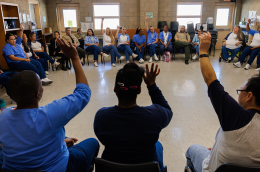
About two dozen incarcerated women sit in chairs arranged in a circle in a classroom. Some raise their hands.
Participatory research in prisons is not just an innovative way to conduct studies. When done thoughtfully and collaboratively, it can create a pathway to concrete, meaningful reform.
Brief An Updated Research Agenda for Latino Homeownership
In 2023, Urban Institute researchers mapped out high-priority research questions to inform strategies to expand homeownership among Latino households. Now, as the outlook for Latino homeownership evolves in a shifting housing market and economic and policy environment, we update this research agenda
Media Name: arrows.png
This report for the Urban Institute’s Prison Research and Innovation Initiative (PRII) documents the challenges and opportunities in improving prison living and working conditions through participatory research. Its findings are informed by interviews with incarcerated people, corrections staff
A group of adults sitting in a circle.
Philanthropy can strengthen community-driven data ecosystems to improve local decisionmaking and scale successful models across cities and regions.
A woman with dark hair and glasses engages in a group discussion.
To help other organizations build and sustain meaningful community engagement, members of Urban’s Health Equity Community Advisory Board offer insights into what made their five-year project successful.
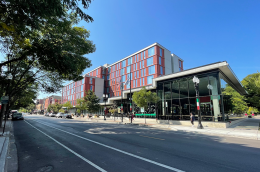
Photo of the Taylor Street Library in Chicago, which sits on the ground floor of a seven-story combined library-apartment building.
Since 2000, more than 1,800 apartment units have been built in combined library-housing developments. These projects not only address local housing needs but can also help libraries better serve their communities.