Urban across the Country

Body

Urban’s researchers partner with state and local leaders to provide the evidence, tools, and support they need to improve lives and strengthen communities. This work includes strategic advising to translate research into action, program evaluations to measure effectiveness, and research and data analysis to inform decisionmaking. Our experts develop custom data tools and modeling to support equitable resource allocation and lead community-engaged research and convenings to ensure policies reflect local priorities.

Use this page to explore Urban’s work. Search by region to see examples of our research, and filter by evidence and products to narrow results by topic or type of work.

Dive deeper into your state and community with our data tools. View highlighted tools below, select “Data tools” under “Filter by Product Types,” or head directly to our data tools page.


Get Involved

State and community data tools

Explore our work by state
Brief How Do Corrections Staff in Five State Prisons View Their Working Conditions?
Corrections staff and their working conditions have historically been overlooked in research, but they are essential to better understand how to improve corrections’ employees’ overall well-being, reduce occupational risks, and increase recruitment and retention, especially during a staffing
Image
A modern illustration of a female graduate looking off into the distance, her back turned to the viewer. The graphic is in tan, red, blue, and black.
We outline several ways researchers and communities can measure students’ upward mobility as adults using unemployment insurance data, credit bureau data, tax records, and other methods.
Data Viz Illustration
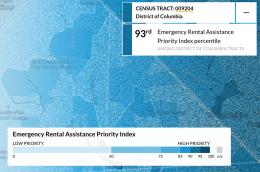
Rental assistance is crucial for people experiencing housing instability. By equitably targeting assistance to neighborhoods with the greatest need, local decisionmakers can help those at greatest risk stay in their homes.
Brief Using Credit Bureau Data to Assess Social and Economic Mobility
This brief describes how researchers can use credit reporting data to assess social and economic mobility. Consumer credit reporting data capture individuals’ interactions with the credit market and are compiled by major credit reporting agencies into a large, consumer-level dataset covering nearly
Brief Using Tax Data to Assess Social and Economic Mobility
This brief describes how researchers can use state and federal tax data to assess social and economic mobility. When households file their taxes, they provide information on income from work, income from assets, tuition paid for education, marriage status, and other mobility information. Federal and
Brief Using Unemployment Insurance Data to Assess Social and Economic Mobility
This brief describes how researchers can use unemployment insurance (UI) wage records to assess social and economic mobility. UI wage records are primarily used to administer the UI program, but they also offer researchers a detailed data source for viewing individual employment and earnings over
Project State of the Safety Net
The United States’ public safety net includes more than a dozen programs intended to help people and families with low incomes meet their basic needs. These programs provide assistance for food, housing, child care, and much more. But who is eligible for and ultimately receives these benefits can
Display Date