Urban across the Country

Body

Urban’s researchers partner with state and local leaders to provide the evidence, tools, and support they need to improve lives and strengthen communities. This work includes strategic advising to translate research into action, program evaluations to measure effectiveness, and research and data analysis to inform decisionmaking. Our experts develop custom data tools and modeling to support equitable resource allocation and lead community-engaged research and convenings to ensure policies reflect local priorities.

Use this page to explore Urban’s work. Search by region to see examples of our research, and filter by evidence and products to narrow results by topic or type of work.

Dive deeper into your state and community with our data tools. View highlighted tools below, select “Data tools” under “Filter by Product Types,” or head directly to our data tools page.

Get Involved

State and community data tools

Explore our work by state
Family of four eating a meal outside at a table
People who qualify for multiple human services programs like TANF, Medicaid and SNAP often face access barriers. Better coordination between programs helps improve service delivery. Our new toolkit can help with coordination.
An older Black man and woman sit on a porch holding their dog
The social safety net for older adults is under growing strain—leaving many at increased risk of housing instability, homelessness, and declining health. Here are five emerging threats and what local policymakers can do now to protect older residents.
Brief AI and Older Workers
This brief describes how artificial intelligence (AI) is changing the workplace for older workers, the skills and training older workers will need to be successful on the job, and the opportunities and challenges AI creates for older workers.
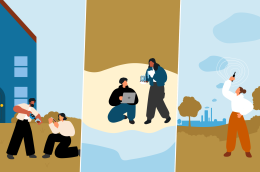
pairs of people testing soil quality, water quality, and air quality
How five local organizations are promoting environmental justice by collecting local data on air, water, and soil quality.
Brief Measuring Program-Level Outcomes in Higher Education
As part of the One Big Beautiful Bill Act, Congress set forth a new rule, the “do no harm” (DNH) standard, that would revoke federal student loan eligibility for programs whose federally aided graduates do not meet a minimum earnings threshold four years after completion.