Urban across the Country

Body

Urban’s researchers partner with state and local leaders to provide the evidence, tools, and support they need to improve lives and strengthen communities. This work includes strategic advising to translate research into action, program evaluations to measure effectiveness, and research and data analysis to inform decisionmaking. Our experts develop custom data tools and modeling to support equitable resource allocation and lead community-engaged research and convenings to ensure policies reflect local priorities.

Use this page to explore Urban’s work. Search by region to see examples of our research, and filter by evidence and products to narrow results by topic or type of work.

Dive deeper into your state and community with our data tools. View highlighted tools below, select “Data tools” under “Filter by Product Types,” or head directly to our data tools page.


Get Involved

State and community data tools

Explore our work by state
An aerial image of houses
We spoke with Urban Institute experts on affordability, homelessness, climate change, and housing finance to find out what they see as the biggest housing challenges facing states and localities this year—plus what they view as the most promising housing actions to address these issues.
Homeless tent on a street
Los Angeles and other cities and counties have been working to reduce homelessness, but recent federal funding cuts threaten these efforts.
Brief Federal Student Aid Portfolio Chartbook
This chartbook presents nine charts that illustrate how federal student aid has changed, focusing on changes in aid since the Great Recession, as well as changes in repayment and forgiveness during and after the pause on student loan repayments.
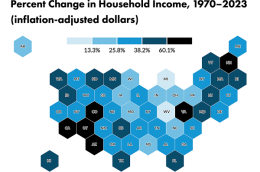
Tile map of the United States showing the percent change in household income from 1970-2023
Headlines often declare that the average person in the US is better off financially now than they were 50 years ago, but not every state has experienced the same economic growth.
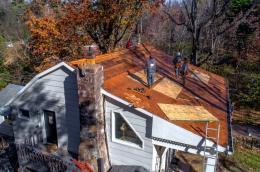
Photo of four construction workers redoing the roof of a small house in a wooded neighborhood.
The low rate of housing obsolescence—despite the country’s aging housing stock—is explained by the fact that homeowners are continually investing in home improvements. But these expenditures are not adequately reflected in home price indexes.
A young Asian​ family is making glittered slime for arts and craft at home during their leisure time. The picture shows the mother and father helping the children get their hands on making slime.
This report provides the first comprehensive, life-cycle trajectory analysis of wealth building anchored in homeownership for AANHPI households over the past two decades.