Urban across the Country

Body

Urban’s researchers partner with state and local leaders to provide the evidence, tools, and support they need to improve lives and strengthen communities. This work includes strategic advising to translate research into action, program evaluations to measure effectiveness, and research and data analysis to inform decisionmaking. Our experts develop custom data tools and modeling to support equitable resource allocation and lead community-engaged research and convenings to ensure policies reflect local priorities.

Use this page to explore Urban’s work. Search by region to see examples of our research, and filter by evidence and products to narrow results by topic or type of work.

Dive deeper into your state and community with our data tools. View highlighted tools below, select “Data tools” under “Filter by Product Types,” or head directly to our data tools page.


Get Involved

State and community data tools

Explore our work by state
Image
Multi Generation Family On Autumn Walk In Countryside Together
The Black Family Thriving Initiative aims to amplify the intergenerational strengths of Black people and families and to reframe the narrative of being Black and middle class in America.
Thumbnail of an image with a gavel in the background. Text in the foreground says "Urban Institute presents: Fines and Fees"Black Family Thriving Initiative
CDFI header image
Many small business owners need to borrow capital to operate, but how an entrepreneur manages debt can lead to significant differences in business outcomes and trajectory.
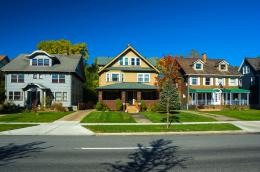
A streetview of three colorful multistory family homes on a sunny residential street.
An overwhelming Senate majority voted to pass the 21st Century ROAD to Housing Act, which aims to make homes more affordable at a time when homeownership is increasingly out of reach for many.
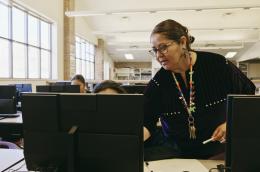
An elder Indigenous woman wearing beaded earrings and a colorful lanyard with many keys and , helps a person working at a computer in a shared space, perhaps a library.
Tomi Rajninger and Gabe Samuels, coauthors on a recent Urban Institute report examining tribal broadband access, spoke with Boise State Public Radio about how physical remoteness, a history of displacement, and inaccurate federal broadband maps have led to less-reliable access to high-speed internet
Image
female teacher working at classroom table with four prekindergarten students