
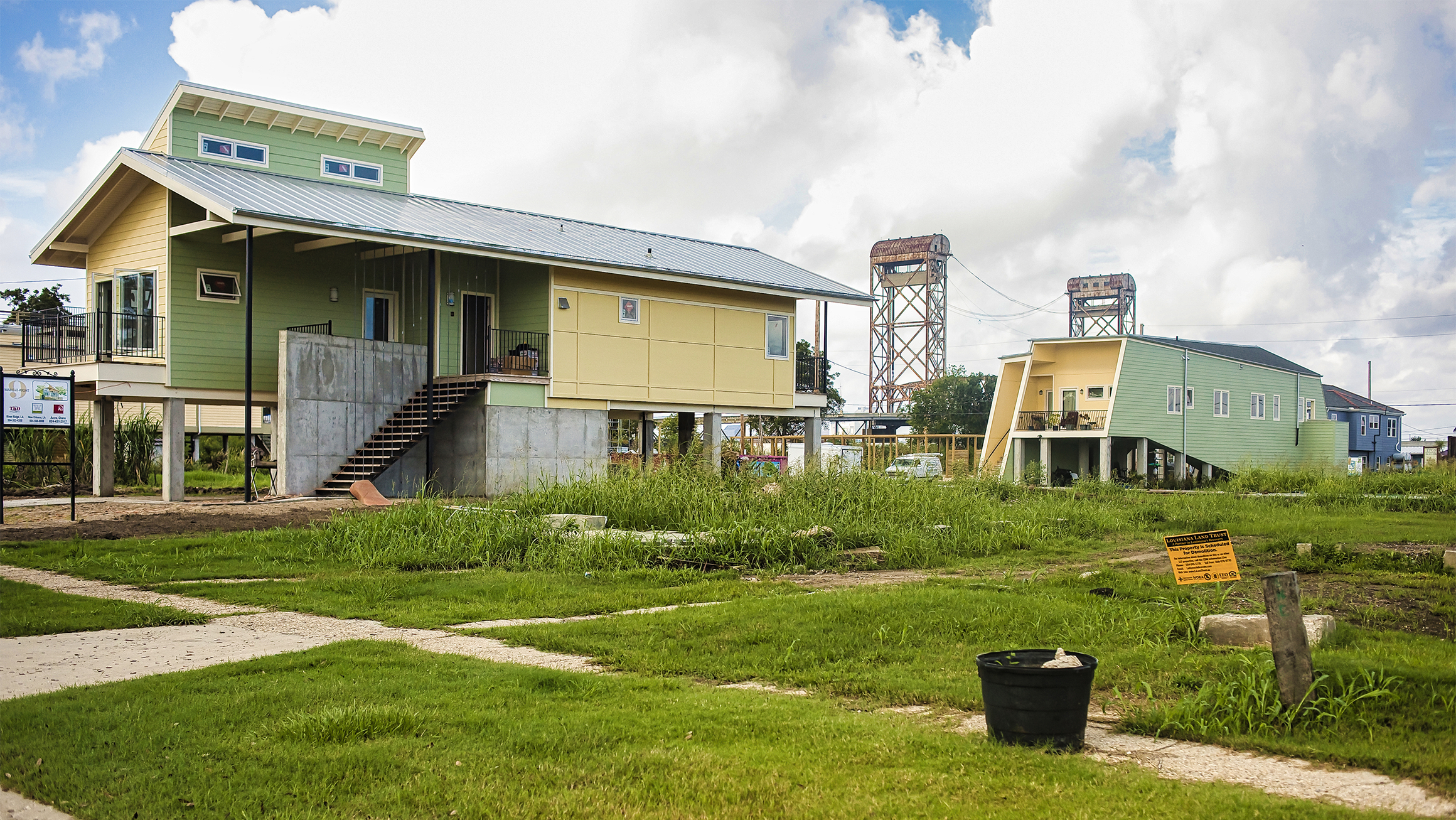
On August 29th, 2005, Hurricane Katrina made landfall in Louisiana, causing catastrophic damage to New Orleans, the state, and large portions of coastal Mississippi and Alabama. More than 1,800 people died and hundreds of thousands were displaced from their homes, schools, churches, and communities. The major industries of the region—including oil, gas, agriculture, and tourism—were severely disrupted.
The federal government’s slow and ineffectual response to Katrina sounded the alarm about the state of emergency management in the US. Lawmakers quickly passed legislation to overhaul the nation’s disaster response and recovery systems, beginning with the bipartisan Post-Katrina Emergency Management Reform Act of 2006. The legislation restored authority to the Federal Emergency Management Agency (FEMA), strengthened coordination between federal agencies, and established regional offices and strike teams that allowed FEMA to act quickly and decisively after disasters. Since then, the federal role in disaster recovery has continued to evolve, with policymakers focused on identifying and supporting vulnerable people and places and mitigating the costs of disasters before they occur.
Now, 20 years after Katrina, federal elected officials are again scrutinizing the federal government’s role in emergency management, with the Trump administration promising to shrink FEMA’s authority and Congressional leaders introducing major legislation aimed at reforming the agency. Foundational changes to federal disaster policy and programs would have significant consequences for the Gulf Coast, where extreme weather and disasters are a critical challenge.
The below charts and associated data look at the last two decades of disasters in the region and how federal spending has shaped disaster response, recovery, and hazard mitigation efforts.
Download all the data from these charts, including state, county, and congressional district-level figures.
How have disasters affected the Gulf Coast since Hurricane Katrina?
The Gulf Coast is the nation’s most disaster-vulnerable region. Alabama, Florida, Mississippi, Louisiana, and Texas collectively have thousands of miles of coastline that are exposed to sea-level rise and storm surge. Hurricanes and tropical storms are routine, as are summer heat waves with dangerously high temperatures and humidity. All these hazards are becoming more frequent or severe because of climate change.
In the Gulf Coast, disasters are not isolated events. Over the past two decades, every county in the Gulf Coast region has experienced at least three federally declared disasters related to natural hazards. All but one county in Florida has experienced at least 10 federally declared disasters in the past two decades—on average a major disaster every two years. Across the Gulf Coast, 57 percent of residents (37 million people) live in a county with at least 10 disaster declarations from 2005 to 2024.
Communities that suffer from compounding disasters—multiple disasters that occur in succession—suffer worse consequences and are left more vulnerable than those that experience singular events.
The above figures don’t account for other types of disasters in the Gulf Coast since Katrina, including the Deepwater Horizon oil spill—the worst oil spill in US history—and the COVID-19 pandemic. These events further compound the effects of disasters like hurricanes and floods, leaving households and communities with fewer resources to respond to and recover from the next event.
Hurricane Katrina remains one of the costliest disasters in US history. But other events in the region, like Hurricane Harvey in 2017 and Hurricane Ian in 2022, have also caused tens of billions of dollars in damage. In fact, disasters in the Gulf Coast since 2005 have caused $365 billion in property damage, accounting for 62 percent of all disaster losses in the US. This total includes $148 billion in property damages in 2005 and $217 billion in property damages since then, reflecting both the magnitude of Katrina and the enormous cost of damages caused by disasters throughout the region.
High-population counties and parishes like Harris (Houston), Orleans (New Orleans), Galveston (Galveston), and Palm Beach (Palm Beach) have experienced the most overall damages. Yet, smaller counties and parishes in Louisiana and Mississippi—such as Cameron, Plaquemines, St. Bernard, and Hancock—have the highest per capita losses, exceeding $150,000 per person in 2024 dollars. And these figures only account for property damage. The full cost of disasters, including their effects on people’s health and well-being and on the economy, are much higher.
Decades of research prove that disasters affect people and communities differently. Groups described as socially vulnerable—people whose social and economic characteristics tend to make them more susceptible to the negative consequences of hazards—often live in places with higher exposure to climate hazards and struggle to recover after disasters. Social vulnerability is relatively high across the Gulf Coast, with 241 counties (45 percent) among the top 20 percent of socially vulnerable counties in the country.
Given that socially vulnerable communities have a particularly difficult road to recovery and struggle with compounding disasters, we compared levels of social vulnerability with levels of per capita property damage from disasters. We find that 108 counties, home to nearly 16 million people (25 percent of the Gulf Coast population) are in both the top 20 percent of socially vulnerable counties and the top 20 percent of per capita disaster damages nationally since 2005. While some of these counties are along the coast, many of them are inland and in relatively less-populated areas with fewer resources at their disposal.
As climate change makes hazards more frequent or severe, the economic and health risks of future disasters will increase. To project the potential costs of disasters in the Gulf Coast in 2050, we used FEMA’s Future Risk Index (FRI), which estimates the increased costs from five climate hazards—coastal flooding, extreme heat, wildfires, hurricanes, and droughts—based on various climate emissions scenarios. The FRI was published on FEMA’s website in December 2024 but has since been taken down as part of the Trump administration’s efforts to remove climate data from government websites. We use the FRI because it is publicly available, provides consistent future projections for multiple climate hazards, and projects losses based on the robust county-level damage estimates in FEMA’s National Risk Index.
The numbers are striking. By 2050, the FRI predicts that Gulf Coast states would lose $32 billion per year from the five climate-related hazards under a “middle of the road” warming scenario, compared with just $15 billion if global warming is not taken into account, which is a 114 percent increase. In fact, a large share of Gulf Coast residents live in counties that are among the top 10 percent for estimated risk from coastal flooding, extreme heat, wildfires, hurricanes, and droughts nationally. By 2050, the majority of Florida’s (69 percent) and Louisiana’s (67 percent) populations will live in those places, along with substantial shares of Mississippi (20 percent), Alabama (17 percent) and Texas (12 percent) residents. That puts all the Gulf Coast states in the top 10 nationally for share of residents living in the highest-risk counties.
How have federal resources supported disaster response and recovery and hazard mitigation in the Gulf Coast?
The federal government actively supports disaster response and recovery and hazard mitigation at the state and local levels, partly by providing financial support (grants and loans) to people, businesses, and governments after a federal disaster has been declared. The contemporary roles and structures of agencies actively involved in disaster management, including FEMA, the US Department of Housing and Urban Development (HUD), and the US Small Business Administration (SBA), were shaped by post-Katrina reforms and have continued to evolve.
Today, the Trump administration wants to downsize FEMA and the federal government’s role in disasters, giving greater responsibility and authority to state and local governments. What might these changes mean for communities across the Gulf Coast region?
After federally declared disasters, FEMA provides financial assistance to households and to state and local governments to defray the costs of response and recovery. In broad terms, FEMA provides Public Assistance grants for state, local, tribal, and territorial governments (as well as some nonprofits) to remove disaster debris, conduct search-and-rescue operations, and repair disaster-damaged public infrastructure, among other efforts. It also provides Individual Assistance grants to people and households for their recovery needs, such as temporary lodging, home repair, and personal property replacement.
Including assistance after Hurricane Katrina, Gulf Coast states received $87 billion in FEMA response and recovery assistance between 2005 and 2024, with Public Assistance grants making up the majority of funding ($61 billion).
While FEMA is the most well-known, dozens of federal agencies, departments, and entities also play a role after disasters. Two of the largest recovery programs after FEMA are the Community Development Block Grant Disaster Recovery program (administered by HUD) and SBA’s disaster loans, which offer low-cost loans to households and small businesses.
Combined, HUD and SBA contributed an additional $86 billion in disaster resources to the Gulf Coast states. Together with FEMA’s disaster funding, these three sources of post-disaster federal aid have granted or loaned a total of $173 billion to the region since 2005.
The federal government also helps communities prepare for disasters by providing state and local emergency management offices with information, training, and financial resources to hire staff. FEMA’s Emergency Management Performance Grant (EMPG) program provides financial assistance that is especially important for small and rural jurisdictions with limited tax bases. Data on the EMPG program are more limited, but between 2014 and 2022 FEMA reports providing $432 million in EMPG funds to the Gulf Coast states.
While historically the federal government has emphasized disaster response and recovery, it has a growing interest in reducing the costs of disasters before they happen. Since the 1990s, Congress has passed numerous bipartisan bills to encourage hazard mitigation—actions taken before disasters to reduce or eliminate their effects. FEMA’s hazard mitigation assistance (HMA) programs are the largest source of mitigation funding nationally and have a substantial return on investment, according to analysis by the National Institute of Building Sciences (PDF). Generally, FEMA estimates (PDF) that federal hazard mitigation spending saves $6 for every $1 spent.
FEMA’s HMA programs include pre- and post-disaster grants. Pre-disaster mitigation grants are universally available, while post-disaster awards are limited to jurisdictions that have experienced a federally declared disaster. Since Katrina, FEMA has awarded more than $13.5 billion in combined pre- and post-disaster hazard mitigation grants to Gulf Coast states, most coming from post-disaster funding. Using FEMA estimates, this spending could be worth more than $81 billion to these communities in avoided losses from future disasters. Much of FEMA’s HMA spending ($9.7 billion; 72 percent) is concentrated in 38 counties, home to 34 percent of the Gulf Coast’s population. These predominately coastal areas are home to some of the region’s largest cities—including Houston, New Orleans, and Miami—but also smaller places like Port Arthur, Texas, and Fort Myers, Florida.
While it is a fraction of overall mitigation spending (25 percent), pre-disaster mitigation funding steadily increased for Gulf Coast communities in the 2010s with the creation of the Building Resilient Infrastructure and Communities (BRIC) program and increased funding from the Infrastructure Investment and Jobs Act. In 2025 the Trump administration made several decisions—including cancelling the BRIC program and placing indefinite holds on other mitigation grants—that put the future of federal hazard mitigation spending in doubt, potentially shifting the cost of those investments onto states.
The next 20 years are vital for Gulf Coast resilience
The cultural, economic, and political landscapes of the Gulf Coast have been shaped and reshaped by disasters over the past 20 years. During that period, the federal government has played a crucial role in helping Gulf Coast communities respond to and recover from disasters and mitigate against future harms.
Today, as they were after Katrina, lawmakers are in a moment of reflection over federal disaster policy. The current administration wants to limit federal support and shift greater responsibility to state and local governments. While specific reforms and their timelines are uncertain, these decisions will have major effects on people and communities throughout the Gulf Coast.
To be clear, the federal government is not the only contributor to disaster recovery: people, organizations, and governments throughout the Gulf Coast have led the way on recovery efforts. Since Katrina, the Gulf Coast has seen a tremendous number of community-led solutions emerge to manage flood risk, provide mutual aid to those in need, and create resilient systems to weather the storms. State and local governments have similarly deployed resources and developed innovative programs.
The scope and magnitude of federal financial support is undeniable, however, and it will become even more vital as climate change increases the frequency and severity of disasters. How will states and localities cover the cost of disasters and recovery if FEMA retreats? What resources will be available to the most vulnerable people and communities? And what investments can federal, state, and local governments make to drive down the costs of disasters and help communities recover quicker? These questions are as urgent today as they were the day after Hurricane Katrina.
ABOUT THE DATA
Corrections (August 19, 2025): When responding to a reader inquiry about the data in this article, we discovered national instead of regional numbers in one section and miscalculated mitigation funding across programs in a second section. We have corrected the following errors, which occurred only in the text:
- The future risk to the Gulf Coast under a middle-of-the-road warming scenario is $32 billion per year, a 114 percent increase compared with just $15 billion if global warming is not taken into account. A previous version listed the national totals of $71 billion and $33 billion, respectively, and an increase of 115 percent.
- FEMA has granted $14 billion (not $10 billion) in hazard mitigation to the Gulf Coast. This change was made in both the figure title and the text. As a result of this miscalculation, we also corrected the avoided losses because of hazard mitigation funding and the amount of FEMA's hazard mitigation spending in the 38 coastal counties. These figures total $81 billion and $9.7 billion (72 percent of all hazard mitigation spending to the Gulf Coast), not $53 billion and $6.2 billion (70 percent), respectively.
Methodology: We assembled data from the Spatial Hazard Events and Loss Database for the United States (SHELDUS) to measure historical property damages from natural hazards; from the CDC’s Social Vulnerability Index (SVI) to measure overburdened communities; from FEMA’s National Risk Index (NRI) and Future Risk Index (FRI) to measure current and climate-adjusted future losses expected from natural hazards; from multiple OpenFEMA datasets to measure major disaster declarations and Individual Assistance, Public Assistance, Emergency Management Grant Program, and Hazard Mitigation Assistance funding; from SBA to measure SBA disaster loans; and from HUD accessed via the Disaster Dollar Database to measure Community Development Block Grant Disaster Recovery funding. We use 2019–23 American Community Survey Data from the US Census Bureau to estimate populations and per capita figures. With the exception of SHELDUS data, all data are from free, open-access sources.
Some FEMA data relate to statewide or multicounty projects. To arrive at county-level funding estimates, we attributed these projects’ funding amounts to the county level proportionate to county populations.
Because of time and data limitations, we are unable to include data about tribal areas and communities as we would like. However, these communities are integral to the Gulf Coast and are disproportionately likely to be burdened by natural hazards owing to structural inequities produced by historical oppression and US federal law. Additional work identifying the climate exposure profiles and resilience opportunities of tribal communities, both in the Gulf Coast and elsewhere, is critical. For similar reasons, we included only the 50 states and Washington, DC, when making national comparisons and do not include data from US territories.
All data featured in the charts are available for download via Urban’s Data Catalog, including state, county, and congressional-district level data, as available.
PROJECT CREDITS
This feature was funded by the Gulf Research Program of the National Academies of Sciences, Engineering, and Medicine. We are grateful to them and to all our funders, who make it possible for Urban to advance its mission. The views expressed are those of the authors and should not be attributed to the Urban Institute, its trustees, or its funders. Funders do not determine research findings or the insights and recommendations of our experts. More information on our funding principles is available here. Read our terms of service here.
Writing: Andrew Rumbach and Sara McTarnaghan
Analysis: Will Curran-Groome and Kameron Lloyd
Data Visualization and Development: Mitchell Thorson
Editing: Wesley Jenkins and Lauren Lastowka
Production: Lydia Nguyen
Let’s help communities build more secure, hopeful futures.
Today’s complex challenges demand smarter solutions. Urban brings decades of expertise to understanding the forces shaping people’s lives and the systems that support them. With rigorous analysis and hands-on guidance, we help leaders across the country design, test, and scale solutions that build pathways for greater opportunity.
Your support makes this possible.
