
People with criminal histories face many barriers when trying to access rental housing. To help mitigate these challenges, some jurisdictions have implemented Fair Chance housing laws. These laws limit the amount of criminal history information that landlords can access and consider when screening rental applications.
We reviewed 15 Fair Chance housing policies from jurisdictions across the US to identify similarities and differences.
Why This Matters
Today, many landlords use tenant screening reports to access detailed criminal histories on rental applicants, even though there is little evidence linking criminal charges or convictions to lease adherence.
Amid a severe shortage of affordable rental housing, these reports can increase the risk of housing instability and homelessness among people with criminal histories. Recognizing the variation in Fair Chance legislations can help researchers and practitioners identify key aspects to positively impact housing access and affordability and help policymakers inform their approaches.
What We Found
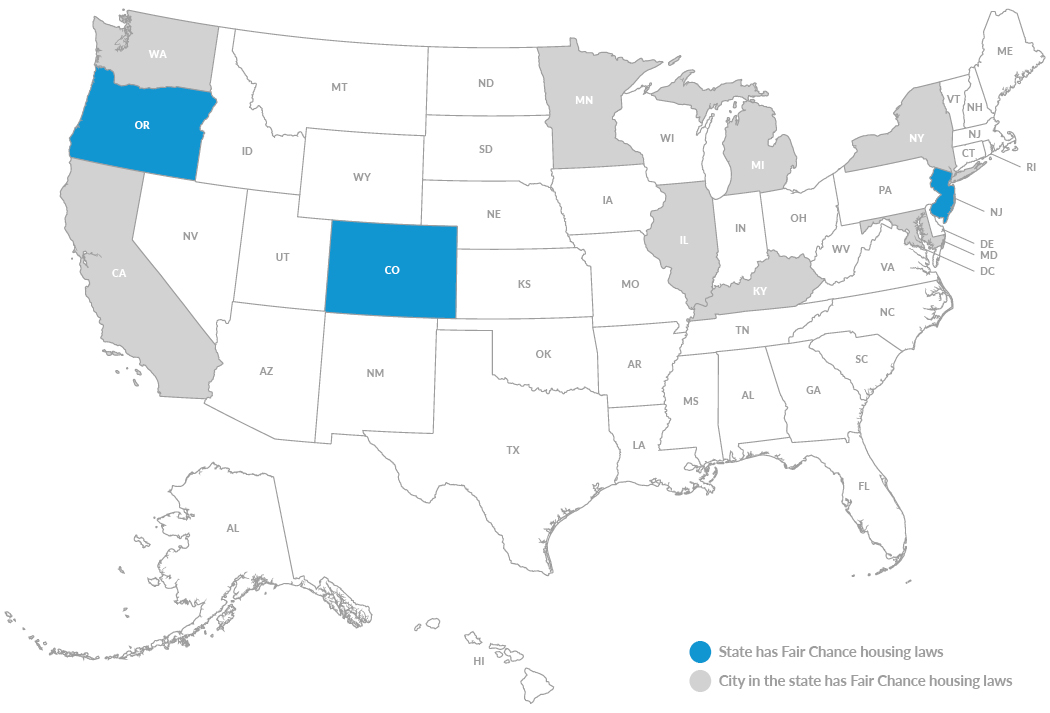
Source: Created by authors based on 15 Fair Chance housing legislations. See the full brief for more information.
Following are variation in Fair Chance housing laws across the US:
- Most jurisdictions (90 percent) focus on how landlords review rental applications. The majority (63 percent) prohibit landlords from rejecting, taking adverse action against, or discriminating against an applicant based on the specific criminal records included in the policy. Six jurisdictions allow landlords to inquire about criminal history once a conditional offer has been made.
- Most jurisdictions (75 percent) specify a look-back period,or how many years of an applicant’s criminal record landlords can consider when screening applicants. Look-back periods range from 3 to 10 years. Notably, New Jersey specifies look-back periods based on the severity of the crime.
- Laws vary on the kinds of criminal records landlords can consider. Most jurisdictions allow landlords to take sexual offenses and methamphetamine production in public housing into consideration, in alignment with eligibility criteria for federal housing support programs. More than a third of jurisdictions allow landlords to consider violent crimes. However, about 40 percent of jurisdictions bar landlords from considering records that did not result in a conviction and 20 percent from considering juvenile records.
- Almost all the laws have exclusions for certain types of housing units. About a third of jurisdictions don’t apply their laws to owner-occupied units, though definitions of such units vary. One region exempts public housing providers.
