
Transportation and housing policy are closely linked. Homes in areas without easy access to employment and services can be unaffordable for their residents, who must spend money on gas and time on the road. Meanwhile, transit systems designed without considering how to effectively serve neighborhoods may be inefficient and underused.
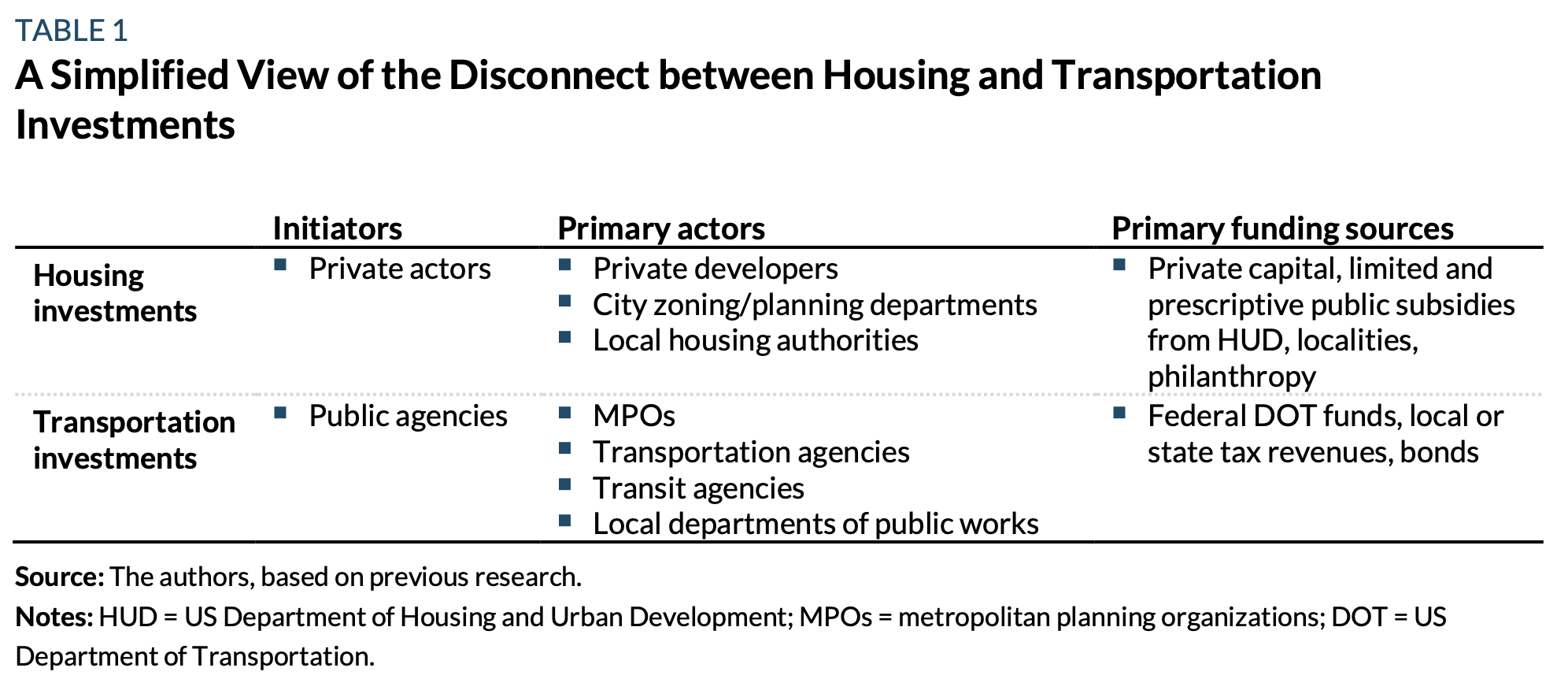
Transportation and housing are interdependent, yet they are often independently determined. In the United States, transportation planning is largely organized at the regional level, while localities make most of the decisions related to housing and land use policy. This policy separation produces metropolitan areas with inefficient distribution of homes and jobs, long commute times, and environmentally unsustainable land use patterns.
In this report, we seek to understand whether regional governmental entities, like metropolitan planning organizations and councils of government, can help bridge the gap. Through a national survey of these organizations, we show that regional coordination of housing and transportation policy is rare. Organizations’ staff members are enthusiastic about regional coordination but need adequate resources to make it possible.
Why This Matters
Many Americans face a tradeoff when choosing where to live: Should they pay higher housing costs or commute a longer distance? These two elements—housing and transportation—represent the largest and second largest portions of many households’ budgets, respectively. Competition among metropolitan jurisdictions to attract the highest-income residents while assuming low costs for public services—such as those that address congestion and homelessness—leads to often inequitable and inefficient arrangements of transportation services and housing. The result is that, in many places, people with the highest needs for job access and mobility live farthest from their places of work, and affordable housing is developed without considering access to effective transportation or concentrations of people in poverty.
In theory, regional planning can mitigate some of these harms by requiring or encouraging a more efficient and equitable distribution of residents and services across localities. Yet regional planning exists in a gray zone within US governance. Though federal law requires the implementation of metropolitan planning organizations, these agencies typically rely on voluntary coordination and have little official oversight of issues related to housing and land use.
Regional Coordination of Transportation and Housing Policy Is Rare
Our survey shows that only 19 percent of staff from regional planning organizations agreed that their planning approaches integrated transportation and housing in their day-to-day activities. Less than half of metropolitan planning organizations—which are responsible for developing regional transportation plans—have integrated local land use laws into their short- and long-range transportation plans.
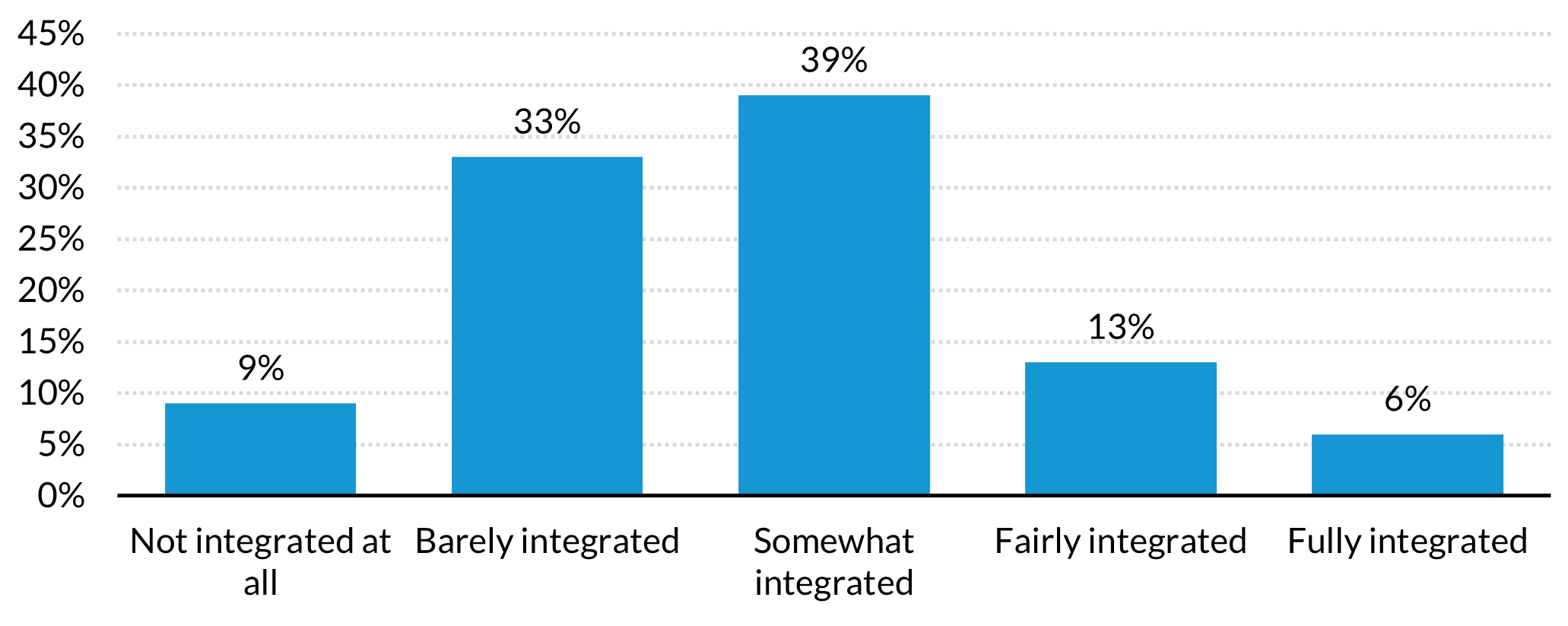
Source: Author analysis of Urban Institute 2024 metropolitan governance and planning organization survey data.
Notes: N = 101.
Among organizations that develop regional plans, only a minority have integrated issues related to affordable housing. Only one-third of respondents reported doing any kind of housing technical assistance or creating regional plans that affect housing. On average, respondents reported that an average of just 5 percent of their total organization’s funding went toward housing activities or subsidies.
Coordination between Transportation and Housing Will Require Additional Resources
Respondents expressed interest in and support for broadening their work in this area, acknowledging the deep connections between housing issues and transportation policy. Many agreed that their boards would support regional housing planning and direct investment in affordable housing subsidies. Many respondents indicated that influencing or helping coordinate local policies could help improve regional planning outcomes.
To do so, however, these organizations will need additional support. Among respondents, 70 percent said they needed funding for planning and affordable housing production. This indicates a lack of federal requirements and funding support for integrated regional planning. Federal rules related to coordinating housing and transportation remain weak and unfunded, leaving much to be desired.
How We Did It
We conducted a national survey of metropolitan governance and planning organizations. Using responses from 143 organizations, we evaluated the degree to which they influence local housing planning and integrate housing into regional transportation plans.
