
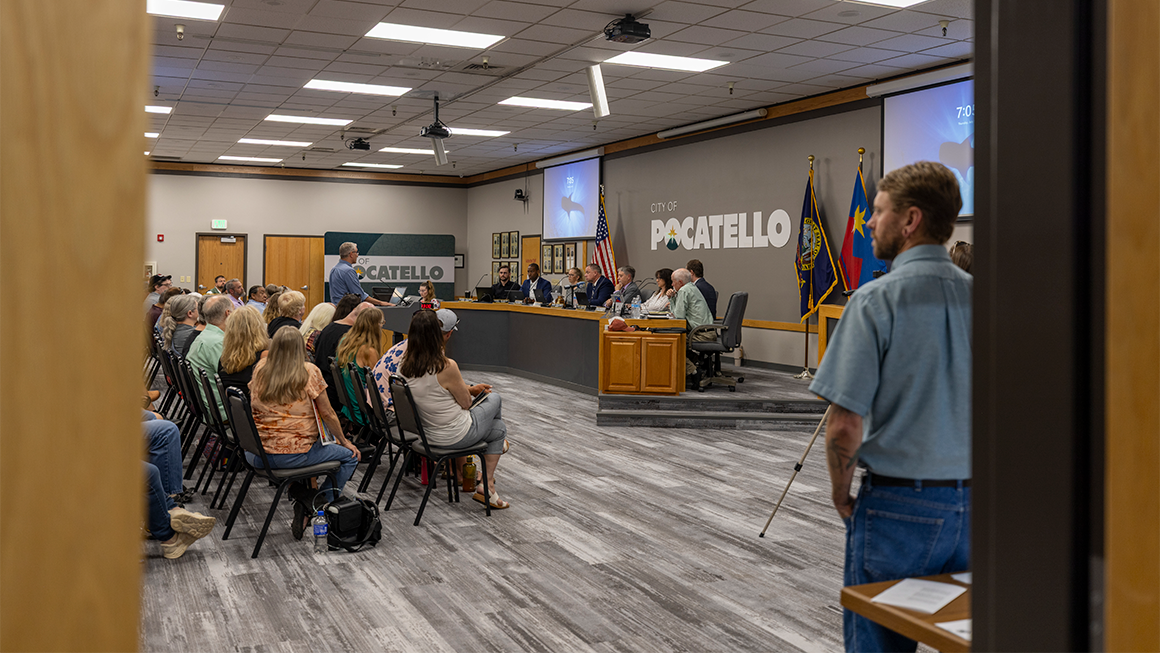
The community backlash against data centers has been loud and swift. Across the country, residents have raised concerns about rising energy costs, water usage, noise pollution, tax exemptions, and artificial intelligence. Ultimately, 75 percent of Americans do not want a data center built in their area, a sentiment that crosses party lines. As a result, policymakers at all levels of government are scrambling to respond.
To prevent their residents from bearing a disproportionate share of the cost and nuisance of data centers, policymakers need to ensure they can deliver benefits for their community while balancing resident concerns. Benefits may include guaranteed revenues, permanent jobs, infrastructure updates, and addressing of environmental concerns. There is no one-size-fits-all model, and policymakers have several governance and policy instruments at their disposal. Determining what levers are right to pull requires policymakers to work with residents to answer three questions about future development:
- Who negotiates trade-offs and decisions?
- Who pays for what?
- Who oversees what can be built where?
With answers to these questions, policymakers will have a better idea of how they can approach data center development in their community. To date, 43 states and more than 200 cities have established data center moratoriums in response to community concerns, giving their leaders time to consider next steps and what levers are available to them when they’re ready to act.
Who Negotiates Trade-offs and Decisions?
Because companies are building data centers at a rapid pace, the first opportunity that many local policymakers have to gather input from the public and secure community benefits from companies and developers is within the processes for technical governance, such as zoning codes and hearings. These local codes and processes are not designed for negotiating agreements between multiple parties, and they happen too late in the process to address fundamental community concerns, often and workforce decisions.
Ideally, residents, governments, and companies would form tripartite agreements early in the process to allow for multiple perspectives and shared decisionmaking (although no agreement covers all decisions or scenarios). These agreements would take place during early site identification and preliminary discussions, before the zoning and permitting processes begin. Absent an early tripartite agreement, policymakers, developers, and communities can still pursue other agreements that can give residents an earlier voice, including the following:
- Developer agreements, which tend to address environmental and infrastructure concerns. These agreements can act as supplementary contracts to negotiate benefits or payments outside the scope of current regulations.
- Project labor agreements and community workforce agreements, which address hiring, training, and workforce standards but don’t always engage the government entity as they’re primarily negotiations between the developer and a labor union. Most frequently, these agreements are focused on immediate construction job creation but may contain provisions related to developing the future workforce through trainings and apprenticeships.
- Community benefits agreements (CBAs) can be negotiated between a private sector company and a neighborhood, community organization, or a local government. Regardless of contractual partners, CBAs respond to specific concerns; commit to achieving employment, health, or other goals; and must include some community engagement and negotiation. In many cases, these agreements require that communities forgo any future claims of harm or options to renegotiate terms.
Although CBAs offer a route to a shared agreement at a local or neighborhood level, some states, like Texas, preempt local government agreements or limit the power of what CBAs can negotiate, particularly around work and wages. Additionally, some states disincentivize companies from signing CBAs: Tennessee has passed legislation to block businesses from receiving state economic incentives if they sign CBAs with nongovernment entities.
Even without tripartite agreements, some developers have pledged nonbinding commitments to pay higher utility rates, reduce water usage, and contribute financially to local initiatives. But these commitments can be difficult to track and often have no external mechanism for enforcement.
Who Pays for What?
Over the past 25 years, more than two-thirds of states have offered significant tax incentives to encourage data center construction. In these cases, the biggest sources of local revenue—corporate, property, and sales taxes—have been reduced, forgiven, or abated by the state or local government before community members learned about a proposed project or had insight into the specifics and could voice agreement or concern with the tax-forgiveness plan.
In part, this misalignment could occur if states offer tax incentives before localities determine where and how a facility is built. If the notification process sits at the local level, the community often doesn’t become aware of project plans and incentives until it’s too late to negotiate larger or longer-term tax and revenue benefits.
State advocates argue that these tax subsidies attract development, which can lead to positive spillover effects and gains. However, research has shown that economic gains are often short-term and limited for the communities where centers were built. Virginia is taxing and subsidizing data centers at the same time, and other states are questioning whether the tax breaks are worthwhile in terms of foregone revenue.
In April 2026, Maine became the first state to eliminate significant tax incentives for data centers. In July 2026, Arizona paused new tax breaks for the next three years to assess and review what path forward makes the most sense. Many other states have pending legislation to scale back these breaks.
Alternatively, some local governments have negotiated PILOTs (payments in lieu of taxes), which involve the developer paying an established annual amount to the local government. This arrangement can provide a predictable revenue source but rarely maximizes revenue from a tax base that has potential to increase over time. State and local policymakers have also waived or subsidized sales taxes, taxes on water, and utility fees, raising questions about whether foregoing usage revenue simply shifts burden to residents.
In some localities, governments are working with companies on energy purchasing and use. For example, for a Google hyperscaler site in Monroe County, Indiana, Google has pledged to pay 100 percent of the site’s energy costs. Monitoring and tracking these pledges and PILOTs over time can provide a clearer revenue picture to guide future incentive decisions.
Who Oversees What Can Be Built Where?
In most localities, zoning and permitting regulations dictate what can be built where. However, industrial and commercial zones often don’t include data centers as a type of development and don’t fully account for their unique needs. Localities may have public engagement processes embedded in commercial development and zoning, but these processes are often inadequate given the scope of public interest in and the in-depth discussions of the potential benefits or harms.
Localities can update zoning codes or introduce specific zoning types to more effectively secure community benefits. “By-right” zoning allows developers to use land in accordance with existing local rules. As residents raise concerns about noise, water use, traffic, emergency access, and more, updates to those existing zoning codes may be necessary to ensure the least harm.
Alternatively, conditional-use permits, special-use permits, site-plan approvals, and other ”by use” zoning tools can account for specific resident concerns and set noise or pollution thresholds. Local governments interested in providing the most oversight to these projects generally rely on “by special exception” zoning models.
To evaluate which of these decisions pay off, policymakers need better data that track promised revenue, jobs, and health and noise standards in ways that are transparent to all parties.
Looking Ahead
With more than 7,500 data centers projected to be operational by next year, state and local policymakers will need to take advantage of all the tools at their disposal. In forthcoming work, we will continue to address these questions and more:
- What policy instruments offer a clear decisionmaking framework that prioritizes local well-being without increasing strain on local infrastructure and residents’ budgets?
- What agreements with communities best distribute the cost and burden of data center buildouts and operation across governments, companies, and communities?
- What approaches balance growth with evidence-based health and safety standards?
- What are effective long-term accountability and enforcement mechanisms?
- What data are needed to measure long-term health and economic outcomes?
By framing decisions and making decisions with community residents, policymakers can pursue more durable processes and achieve shared goals.
