
In this brief, we use December 2025 data from the Urban Institute’s Well-Being and Basic Needs Survey (WBNS) to explore the experiences of adults ages 18–64 who reported receiving a notice about the able-bodied adult without dependents (ABAWD) SNAP work requirement in the last year, including whether they applied for and received an exemption and their confidence in their ability to meet the work requirement. This analysis can inform efforts to monitor SNAP participation trends in 2026, as more SNAP participants may exit the program due to challenges with meeting work requirements or navigating the paperwork associated with documenting compliance or an exemption.
Why This Matters
In the wake of the One Big Beautiful Bill Act, SNAP work requirements and time limits now apply to a much larger segment of the population eligible for SNAP. The findings from our analysis indicate that many adults are not confident they can meet these requirements, and evidence shows that many factors may constrain program participants’ ability to find and maintain sufficient work. Adults newly subject to this work requirement may also face outsized barriers to meeting it and therefore face increased risk of losing benefits.
Administrative data already show SNAP participation declined by approximately 12 percent between July 2025 and May 2026, and families may face additional pressures on their household budgets in 2027 as additional OBBBA provisions take effect. Loss of SNAP benefits, and the potential loss of other federal safety net supports like Medicaid, is expected to increase food insecurity among low-income families across the country.
Key Takeaways
Nearly 1 in 5 (18.2 percent) working-age adults currently participating in SNAP reported their families received a work requirement notice in the last year.
- 1 in 4 (23.9 percent) working-age adults who received a notice and are currently participating in SNAP reported having an approved exemption.
- Nearly half (46.4 percent) of working-age adults who may be subject to work requirements are not confident they can meet the requirements.
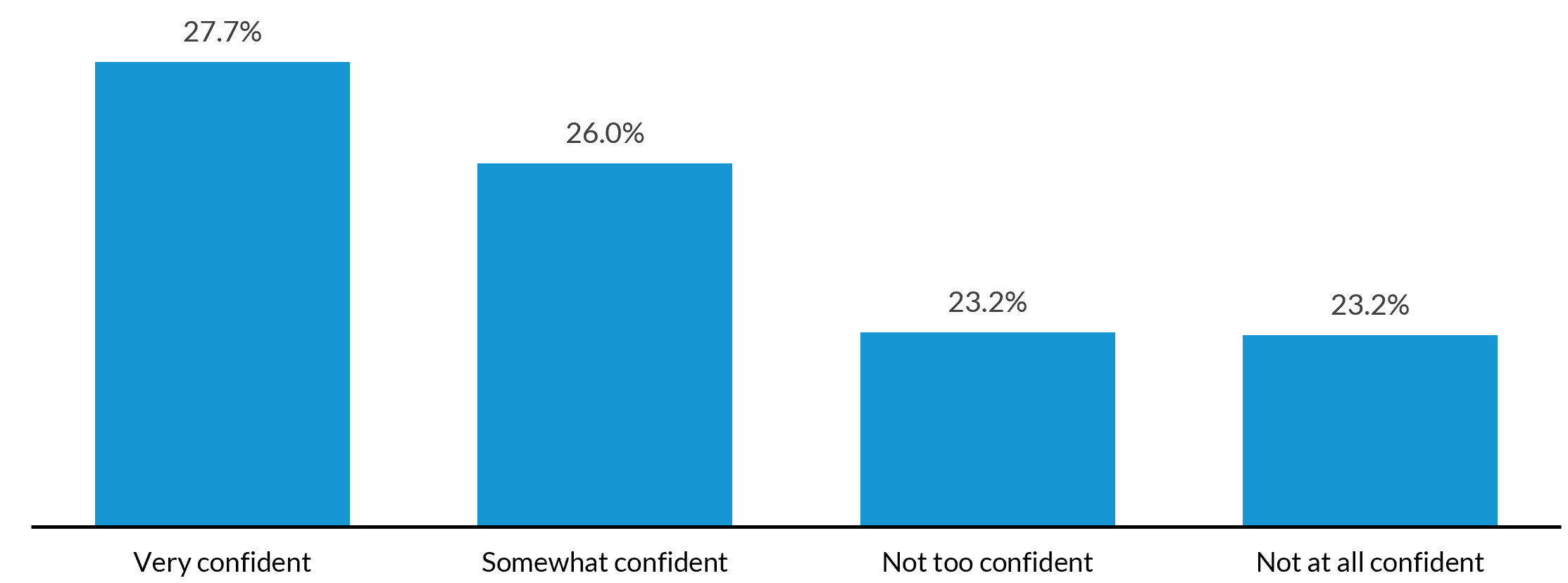
Source: Well-Being and Basic Needs Survey, December 2025.
Notes: Estimates are shown for adults ages 18 to 64 whose families participated in SNAP in the last 12 months and were still receiving SNAP at the time of the survey, who received a notice about work requirements in the last 12 months, and who did not have an approved exemption.
How We Did It
This analysis draws on data from the December 2025 round of the WBNS, a nationally representative, annual survey of adults that monitors individual and family well-being in the context of a changing safety net. More than 10,000 adults participated in the 2025 survey round.
