Access to basic needs is key to a successful transition to adulthood, but gaps in the safety net leave many young people without the supports they need. By leveraging the expertise, infrastructure, and networks of partner organizations, human services agencies can work toward improving their safety net services for young people.
This fact sheet highlights strategies human services agencies can use to develop strategic partnerships. It draws on insights from a series of workgroups with staff at human services agencies and youth-serving nonprofits, as well as young leaders.
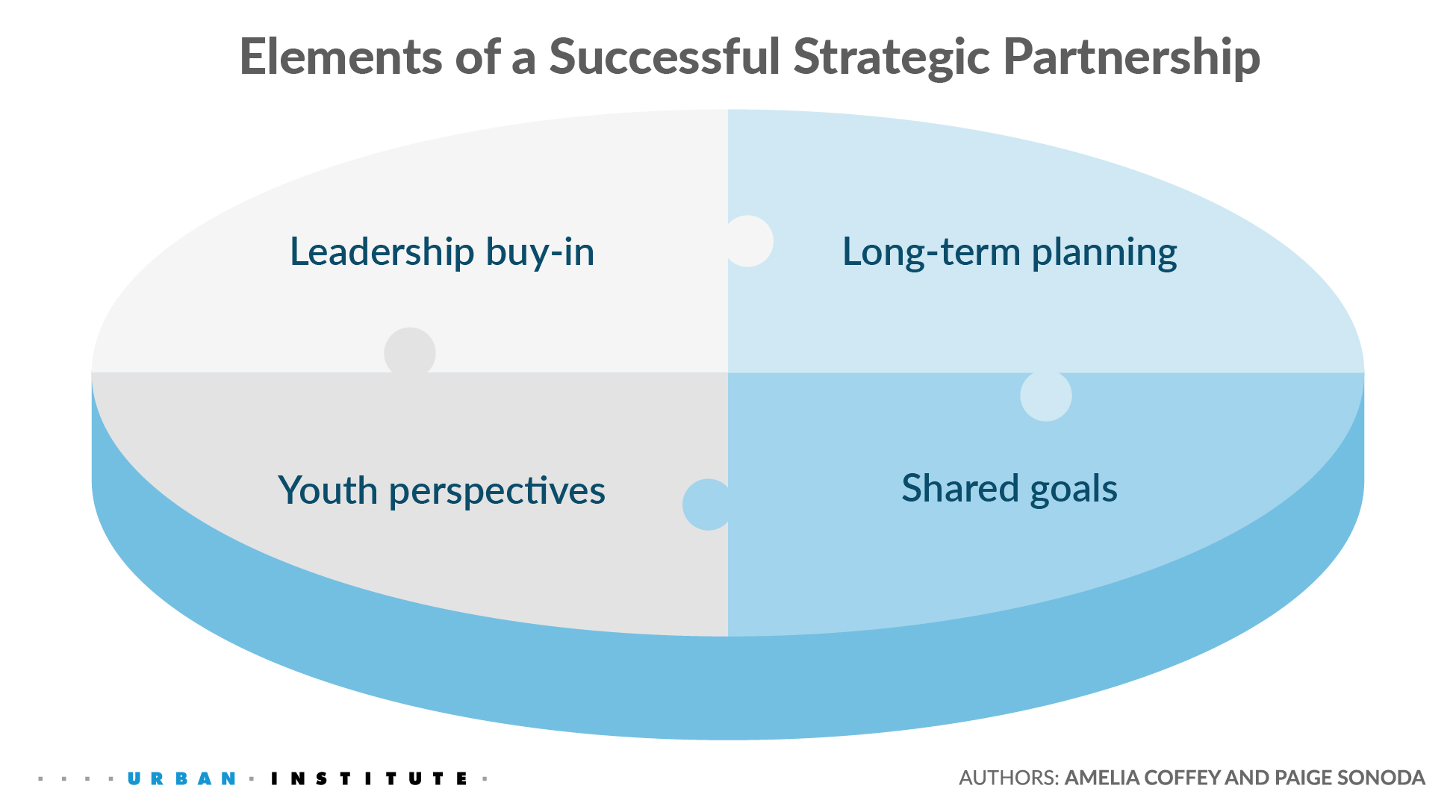
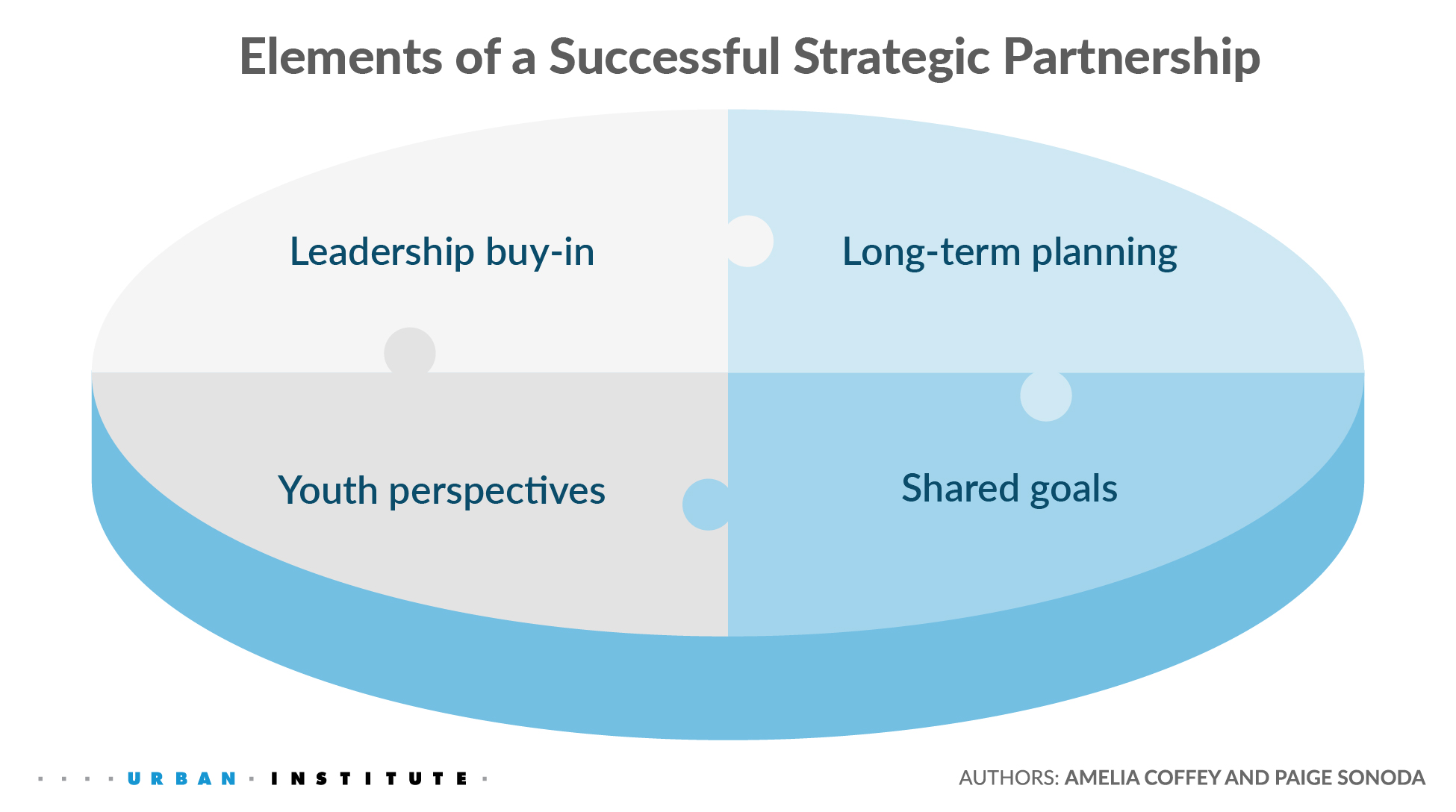
To form a strong partnership, benefits agencies will need buy-in from agency leaders. Prospective partners should explain their respective goals and capacity gaps and determine whether a collaboration will be mutually beneficial. Long-term planning and ongoing communication are also key to a successful collaboration. When forming partnerships, agencies should strive to involve young people with lived experience with safety net programs as leaders.