
This report explores the challenges faced by small business owners and the disproportionate effects these challenges have on Black small businesses and their growth. It identifies the implications of disparities in small business ownership and growth for the racial wealth divide and local economies. Local policymakers can learn about how local policies can support Black small businesses in addition to small businesses in general and why such policies are necessary.
Why This Matters
This report highlights issues of racial wealth disparities and their negative effects on Black households’ wealth and local economies. Groups that could be affected by changes in policy or practice are households of color that operate or are looking to operate small businesses in their communities. Increased economic inclusion can build community wealth not only for families of color but for cities more broadly.
What We Found
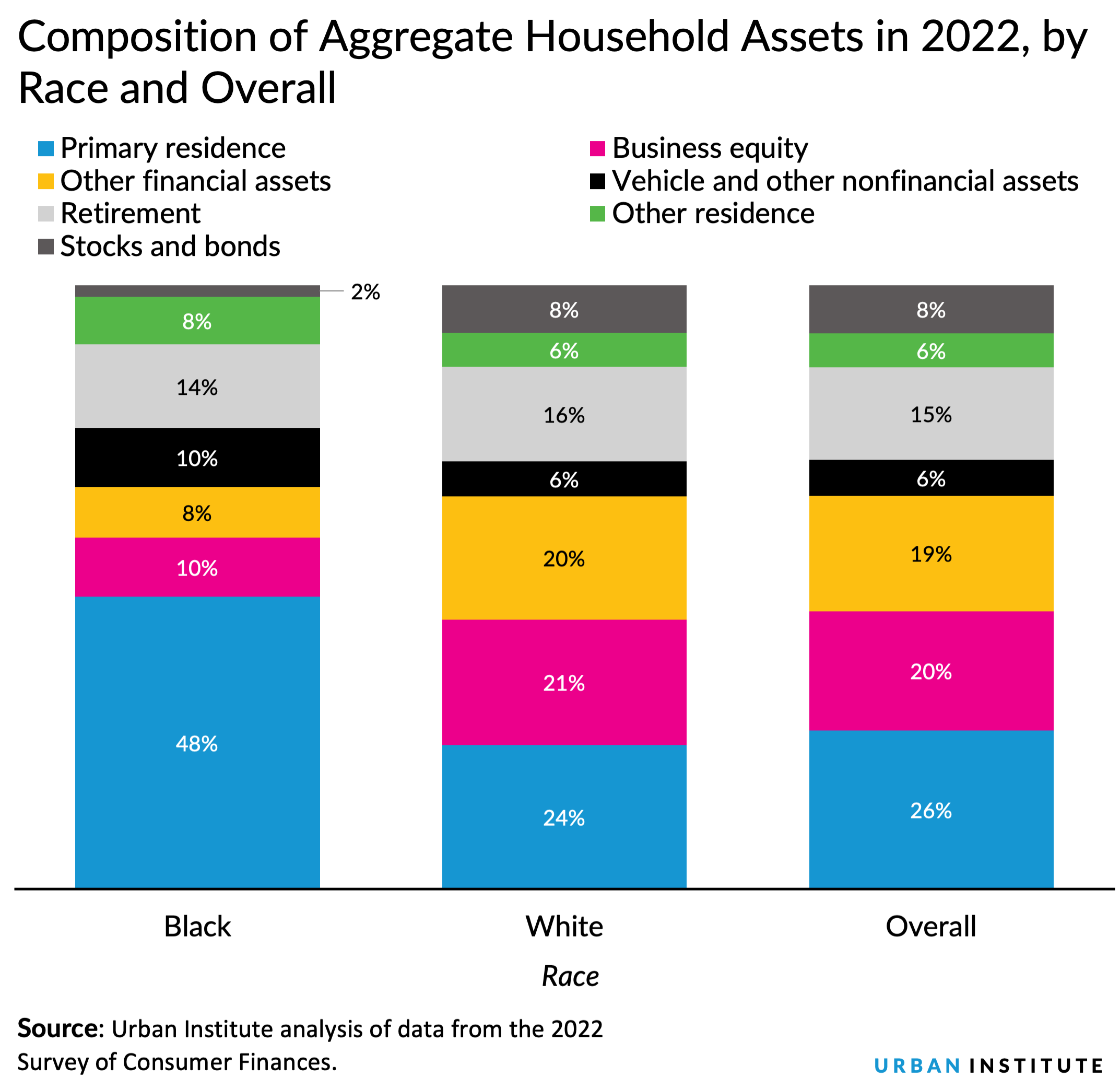
- After homeownership, business equity is the second-largest source of household wealth for households overall.
- Providing access to equitable procurement, providing hands-on training and technical resources, and creating impact reporting to identify and address gaps are ways cities can reduce the disparities in Black business ownership and growth.
- Black households have less business equity in their portfolios than white families.
- Challenges that small business owners face include a lack of access to capital and availability of quality labor. For Black small business owners, racial inequities exacerbate these challenges.
- Compared with white-owned businesses, Black-owned businesses tend to be smaller, both in terms of number of employees and total revenue.
How We Did It
We pulled data from the Federal Reserve Board’s Survey of Consumer Finances and found the composition of each asset class from the main financial asset categories disaggregated for Black households, white households, and US families overall. Furthermore, we used the Black Wealth Data Center’s collection of data from the US Census Bureau’s Annual Business Survey and identified the firm size of businesses disaggregated by race for Black and white households.
