
Land-use policies and zoning shape where people live, work, and connect, yet communities most affected often have limited influence. Though intended to protect public health, these systems have also contributed to unequal outcomes across neighborhoods. As communities confront challenges like housing affordability, they need to build the capacity of local leaders and residents to successfully navigate these complex land use systems as part of broader zoning and planning reforms.
Community planning academies (CPAs) help residents understand planning, zoning, and development so they can engage meaningfully in decisions that shape their neighborhoods. This guide offers CPA administrators practical strategies for facilitating discussions about how communities have evolved so that residents can identify opportunities to influence the process to create more equitable, inclusive futures.
Why This Matters
Reforming planning processes requires a shared understanding of how past decisions continue to shape inequitable outcomes today. CPAs offer a structured learning space where residents, planners, and civic leaders can safely engage in difficult conversations about the legacy of exclusionary land use and development. By confronting this history, communities can more clearly identify where change is needed and how to shape a more equitable future. Without this collective reflection, harmful patterns in planning and development are likely to persist, reinforcing existing disparities and limiting opportunities for meaningful reform.
What We Found
- Historical land-use policies concentrate power and can create barriers to addressing critical challenges today. Exclusionary policies (e.g., redlining) and discretionary processes (e.g., rezoning, conditional use) continue to impact the health, wealth, and opportunity in communities today.
- CPAs can build community capacity to intervene. CPAs can teach land use/zoning mechanics, surface “invisible” barriers, use local data/mapping and simulations, and equip residents with strategies (zoning reform, anti-displacement, community‑led planning) to pursue more equitable land‑use outcomes.
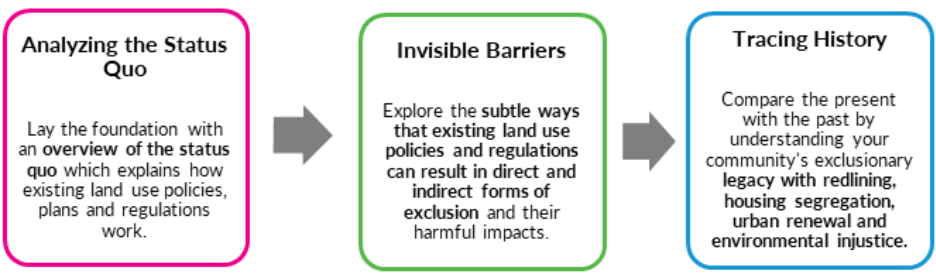
- Facilitators need to tailor discussions about the historical context and the legacy of exclusionary land-use policies to community and participant readiness to engage in these difficult conversations. This means adapting a natural progression that introduces topics gradually, in a way that increases awareness, ability to wrestle with the problem, and builds trust (see graphic below).
How We Did It
This brief was developed based on lessons learned from standing up community planning academies in Fresno, CA and Memphis, TN and informed by conversations with CPA administrators across the country.
