To meet the needs of students, community colleges have become benefit navigators, social service providers, cultural safe havens, child care centers, emergency aid responders, real estate developers, re-integrators for those who have been justice-involved, and much more. They are also places where community members vote, receive vaccine boosters during pandemics, experience new forms of artistic expression, and incubate new business ideas. In all these ways, colleges serve and nurture their communities, but often these benefits are not documented or considered when a college is judged by its accreditors or local taxpayers.
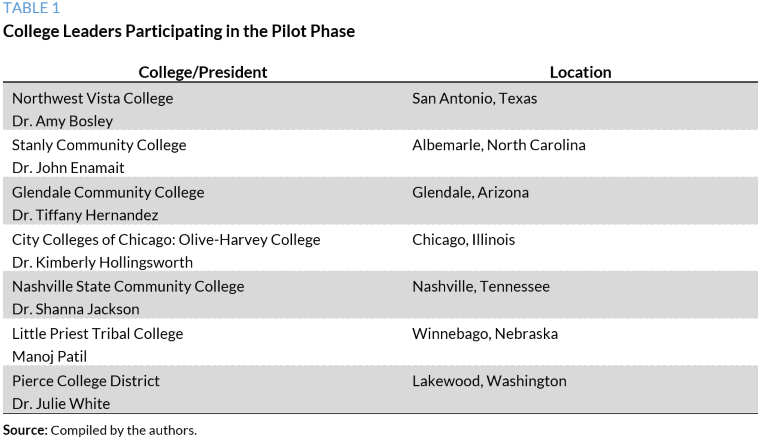
The Colleges Contributing Value to Communities (CO3) project aims to capture the contributions that community colleges are making to their communities, but that have been ignored in previous return-on-investment (ROI) studies and rankings. The goal is to partner with college leaders in defining new measures of value that will position colleges to more effectively collaborate with community stakeholders on outcomes that will also benefit their students (table 1).
Starting with a group of seven community colleges, this pilot aims to help shape a new narrative for colleges—a narrative that incorporates their community contributions, sets up leaders to build capacity and improve performance, and models how to reach shared community goals in partnership with other regional actors. The project aims to define metrics of success for open-access institutions that go beyond student graduation rates and employment, and to provide individual colleges with tools to identify and communicate their value to community stakeholders.
The rationale for pursuing this idea is to show that, while open-access schools typically can’t compete on the traditional metrics that colleges are often judged by (completion, earnings, and selectivity), they can compete much better on community-based measures, because their stakeholders and dollars tend to stay local. By highlighting how valuable these schools are locally, we can help them secure more sustained public investment and achieve better standing in their communities.
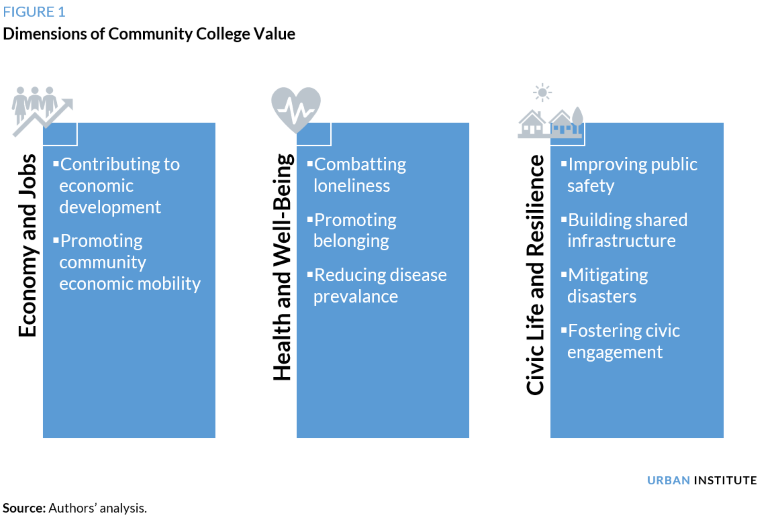
During this pilot, the college presidents attended three Urban-led workshops as well as several individual and small-group consultations to identify new dimensions of college value for the academic year 2024–25 (figure 1). The workshops focused on identifying individual measures of success and college value, developing strategies for communicating these measures, and using data in telling their own stories of community impact to relevant stakeholders. Along the way, each president consulted with their team to develop testable project ideas that could serve as a launching point for a subsequent implementation phase.