
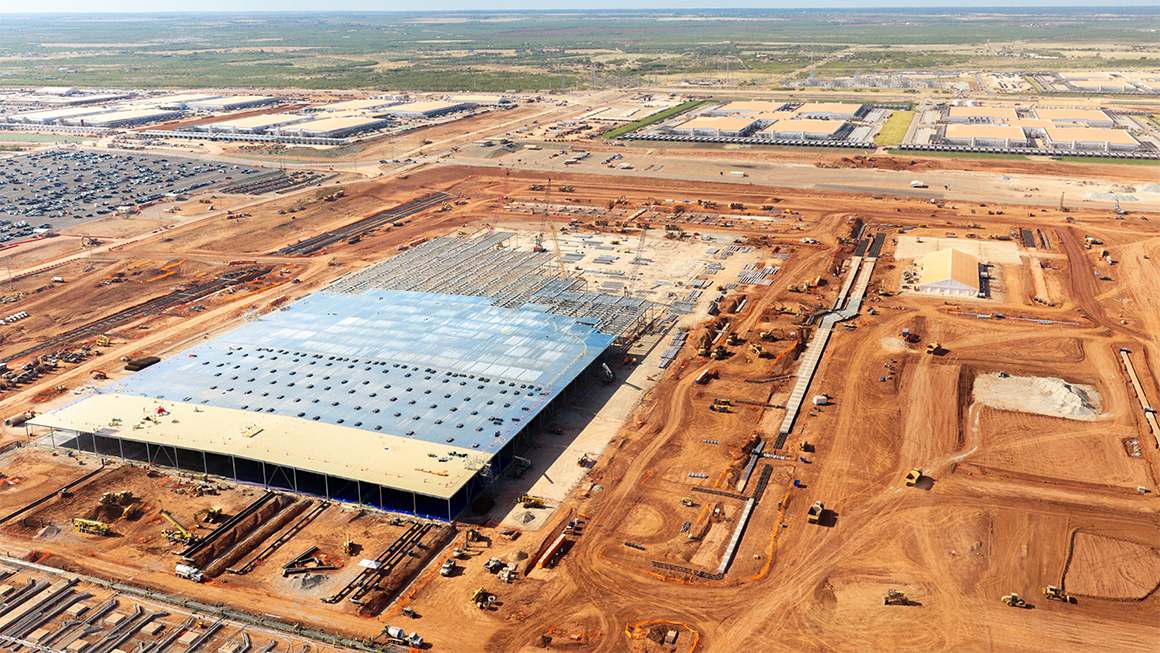
Across the country, data centers are growing faster than local government processes can handle. Already, the US has more than 2,000 data centers, with thousands more announced or in development. These investments not only support AI model training, cloud computing, and data storage, but also promise jobs, tax revenue, and economic stimulation for local economies.
However, data centers also consume energy and create noise and air pollution, with 4.4 percent of all 2023 electricity consumption in the US originating from data centers, a share that is expected to grow to 12 percent by 2028. A 2025 study estimated that electricity bills could increase by 8 percent nationally and as much as 25 percent in areas with high data center growth.
With local policymakers weighing potential economic gains against the possible costs to their communities, many have established moratoriums or temporary restrictions on data center buildouts. As of September 2026, 313 moratoriums have been enacted, affecting 44 states and more than 200 cities, counties, and other localities. Further, a federal pause is under discussion. Because moratoriums are time-limited restrictions on new permit applications or certain types of data centers, many AI companies are prepared to apply and build as soon as the restrictions are lifted.
As such, moratoriums are not a long-term solution: they’re a pause, not a ban. But that pause offers an important opportunity for local leaders to plan for what’s next. In this article, we outline a checklist for policymakers to consider what questions to ask, who to engage, and what tools are available when considering whether a data center is right for a community. This checklist focuses on the government and engagement processes that can complement other resources from associations of localities (PDF), regional planners, advocates, and scientists (PDF).
These tools and resources along with peer learning (e.g., through the Data Center Working Group and other consortia of counties and cities) can help mitigate some of the capacity imbalances that localities, especially smaller and more rural communities, face compared with large-scale developers.
Below, we list the questions in the checklist, divided into four areas: accountability and governance; engagement with community; revenue sources and tax base; and outcomes across utility costs, infrastructure, jobs, and public land. For each question, we describe examples of how communities have started to answer these questions, but we do not endorse any one method. For example, some policymakers are approaching data center concerns with new regulations or standards, while others are sticking to tax incentives and rewards. The right approach for a specific community will depend on resident and economic needs and what constituents request. Once local leaders have listened to and responded with the best approach for their community, they can explore when and how to deploy the governance and policy instruments available to them to maximize community benefits.
1. Select an Accountability and Governance Approach
Who will oversee data center negotiations and who is at the table?
Some governments have recognized that accountability to the community starts long before a data center developer or company has a site planned or a tax break finalized. El Paso, Texas, created a data center policy framework and consulted with the community (PDF) before approval, ensuring that feedback sessions, public comments, surveys, and other community engagements guided decisions about data centers.
In other local governments, community input came during zoning and permitting processes and after tax incentives were already decided. Sometimes, this ordering of events happens because the development followed a standard public hearing process for zoning (e.g., public hearings in Chandler, Arizona), which does not include tax decisions. Loudon County, Virginia, home to the largest concentration of data centers in the US, with 233 active sites in its 520 square miles, has offered newsletter-style updates, public reports on planning and shifts in requirements, an interactive dashboard related to new developments, and an online form for public comments.
How will policymakers work with the public utility or public utility commission to design rate setting and ratepayer protections?
The Georgia Public Service Commission worked with Georgia Power (their public utility commission) to approve a rule that sets customized rates and standards (PDF) for all large-load customers with energy usage exceeding certain thresholds. This rule helps to prevent costs from shifting toward residential and small business customers. Loudon County, Virginia, is also considering a requirement for on-site power generation to mitigate noise and pollution impacts, which would affect permitting as much as rate-setting.
How will tax assessors and the department of finance ensure taxes are levied and paid?
Prince William County, Virginia, uses a data-center-specific accounting and reporting framework for tracking property taxes, business tangible property taxes, and taxes related to fees and licensing. It also releases an annual Data Center Industry Tax Revenue Report as an accountability and transparency tool.
2. Start Negotiations with Community Members
How will affected residents be informed? Will outreach extend beyond minimum notification requirements? What alternatives are available? What is the consent or agreement process before development begins again?
Community input is most effective earlier in the process, before it’s weighed down by technical decisionmaking. Yet most often, by the time the community learns about a data center, zoning and permitting discussions are already underway.
To prompt earlier feedback and engagement, cities like North Richland Hills, Texas, have updated their zoning ordinances to cue procedural items such as broader notification areas, informational meetings, public hearings, land use reviews and assessments, and more. In Jones County, Georgia, community members sued the county for what they perceived as a flawed data center zoning process that could not deliver on engagement, transparency, and impact assessments.
Where is the data center sited? Does this overlap with places where other industrial facilities have been located (landfills, airports, etc.)? What is the history of development in this area? How does the data center siting and incentives process learn from past lessons?
Scholars have raised concerns around the potential of “digital redlining,” a process where developers place large-scale data centers in communities of color that have historically been overexposed to environmental harms and property depreciation.
Cities can use tools such as Urban’s Spatial Equity Data Tool to compare development plans with local health outcomes to see whether data centers are clustering in high- or low-amenity neighborhoods.
When and how will local leaders negotiate community benefits? Will a community fund be established? If so, who will govern or monitor its uses?
Lysander, New York, has used the one-year statewide moratorium to establish a Data Center Advisory Committee (PDF), which includes representatives from the town, the county, the state, and the community. This committee aims to explore potential community benefits agreements, guidance for local government, and how to handle water and electricity concerns. Along with the moratorium, New York State directed their economic development agency to develop a Community Investment Framework to help localities negotiate benefits like infrastructure improvements and financial investments.
In Cedar Rapids, Iowa, the local government negotiated community funds from developers, with Google paying the city $400,000 annually with a cap at $18 million and QTS paying $300,000 annually with a cap of $16 million. The city is still determining how those funds will be used, but the mayor has indicated that they will be dedicated to community betterment.
The NAACP developed a template community benefits agreement that community groups and municipalities can use to outline commitments, scope, and accountability mechanisms. The city of Lancaster, Pennsylvania, has one of the few publicly posted and widely shared community benefits agreements related to data centers.
Does the zoning code and permitting address data centers specifically? For permitting, are there “conditional use” provisions to set approvals and conditions (as opposed to by-right zoning)?
In 2025, Phoenix, Arizona, noticed that in its zoning code, data centers were not defined or listed as an option for permitted use and thus were categorized as more traditional infrastructure, like office spaces or telecommunication facilities. Phoenix amended its zoning code to categorize data centers under “special permit uses,” which are subject to different standards around noise, light, electricity, and other environmental and safety concerns. Following a six-month moratorium, Birmingham, Alabama, passed an updated zoning ordinance in June 2026 that outlines 20 protections for residents related to water, noise, safety, electricity, site location, and other community concerns.
Some groups have developed model ordinances and guides to help municipalities update their zoning codes before data center development begins. The National Association of Counties has prepared primers for those in county government. The National Association of Development Organizations has compiled resources for Economic Development Districts and Regional Development Organizations. Pennsylvania’s recent executive order on “Protecting Pennsylvania Consumers from Data Center Impacts” includes a stipulation that the state will share best practices on zoning standards and community benefit agreements for localities.
How can infrastructure, environmental, and fiscal impact assessments inform the location and scope of development?
After a 180-day moratorium, Aurora, Illinois, instituted a new regulatory framework for data centers that included requirements around water and noise studies, renewable energy use, public engagement and transparency. The framework is one of the strictest in the state and helps to integrate the city’s economic and community development work with its sustainability efforts.
Virginia has required that all “high energy use facilities” do a site assessment around noise pollution in the surrounding area and encourages localities to require additional assessments on the effects on water, agriculture, and registered historic sites. This assessment dovetails with the special exemption use permit that has more stringent performance requirements on energy use, water use, noise, and air quality.
3. Identify Revenue Sources and a Long-Term Tax Base
Will revenue come from taxation, payments, dividends, or something else? What about the development is taxed (land use, sales, electricity use, etc.)? Are taxes phased over time or proportional to growth?
With states and counties eager to bring new development to their areas, legislators and organizers want to know who is paying for a development and over what time frame. In Connecticut, developers must enter into Host Municipality Fee Agreements with cities and towns before construction begins to determine exemptions on taxes, specify the duration of those exemptions, and set the fee amounts paid to the municipality.
Piqua, Ohio, negotiated a PILOT (payment in lieu of taxes) for $8 million of upfront investment in public safety equipment and personnel and $735,000 annually per data center building. However, without a method for evaluating how these abatements and payments compare with total revenue if the data center were taxed at typical rates, communities struggle to determine if the deal benefits them.
Localities can also lean on economic modeling tools and evaluations that are common in other large-scale infrastructure projects to assess and align incentives to expected revenue (Virginia and Washington have done some initial analysis through state legislative audit commissions).
How long do tax incentives last and do they align with expected community benefits?
In New Carlisle, Indiana, Amazon received roughly $8 billion in tax exemptions for the development of a 16-building data center complex. Those exemptions include requirements around wage rates and a community enhancement agreement, which the city estimates to be worth $143 million, but which does not significantly address power or water concerns.
Orangeburg, New York, faced scrutiny when watchdog groups found that the city offered $77 million in tax breaks to a JPMorganChase data center despite the expectation of only one permanent job. In April 2026, Port Washington, Wisconsin, passed an ordinance requiring public approval for tax breaks for data center developments that cost more than $10 million.
4. Monitor Outcomes During and After the Moratorium
Utility rates and cost burden: What is the current utility cost burden for residents? What steps can policymakers take to reduce cost burdens, especially for low-income households? What is the plan for mitigating increases in utility rates and costs? On what time frame? How much will developers pay for water and power costs?
In Ohio, large data centers are required to pay 85 percent of their expected power needs (regardless of usage) and lock in multiyear electricity contracts (at least 8 to 12 years). Additionally, data centers must provide upfront collateral to mitigate costs on new energy infrastructure that may pass onto residents and pay exit fees if they end services early. Ohio is considering limiting the tax incentives by half for most data centers and by 25 percent for data centers that create their own power or that build on sites designated as “brownfields.”
In response to significant community advocacy, Wisconsin now requires data centers to cover 100 percent of their energy infrastructure and power costs. Though on-site energy generation may reduce pressure on the grid, it could increase pollution if local energy is overly reliant on fossil fuels. Some governing bodies, such as Virginia’s General Assembly, are considering additional legislation that would require data centers to meet energy efficiency standards.
The City of Quincy, Washington, partnered with Microsoft to build a water reuse utility that treats and recycles the water used in the data center so as not to overwhelm the local water supply. Microsoft was responsible for the capital costs associated with this system (approximately $31 million), but the city is responsible for staffing and running its ongoing operation.
Infrastructure: How will companies invest in new water-use patterns required for cooling? Or new power generation on-site or closer to the site?
Monticello, Minnesota, requires data center developers to submit robust plans on water needs, energy use, and expected environmental and fiscal impacts during the permit application process. A current applicant, Monticello Tech, included plans to extend water and sewer service from the nearby system using city and developer funds to mitigate concerns for nearby residents.
Jobs: How will jobs be created after the first year of construction and operation? How will long-term job creation be measured and should incentives depend on those outcomes?
Seventeen states have job-creation requirements beyond the construction phase, and several require that these jobs exceed specific wage thresholds to receive tax incentives. Some states are reviewing these requirements to ensure that the expected job creation benefit is worth the foregone revenue from tax incentives. For example, Illinois offered tax exemptions for data centers that created at least 20 jobs with wages at 120 percent of the median full-time wage in the county, but has since paused this incentive.
Policymakers and community groups could adapt resources like the Capital for Communities Scorecard, which assesses the potential social, economic, and environmental impacts of proposed business developments, to the data center context to help determine whether the project will strengthen the community.
Public land and personal property: How will property values be considered in relation to nuisance factors like noise and other pollution? What city development and remediation processes are in place for decommissioned data centers?
Susquehanna County in Pennsylvania passed an ordinance detailing the decommission process for data centers, which included requirements to remove hazardous materials and regrade and reseed any disturbed earth. The ordinance clarifies that all associated costs will be the responsibility of the developer.
