
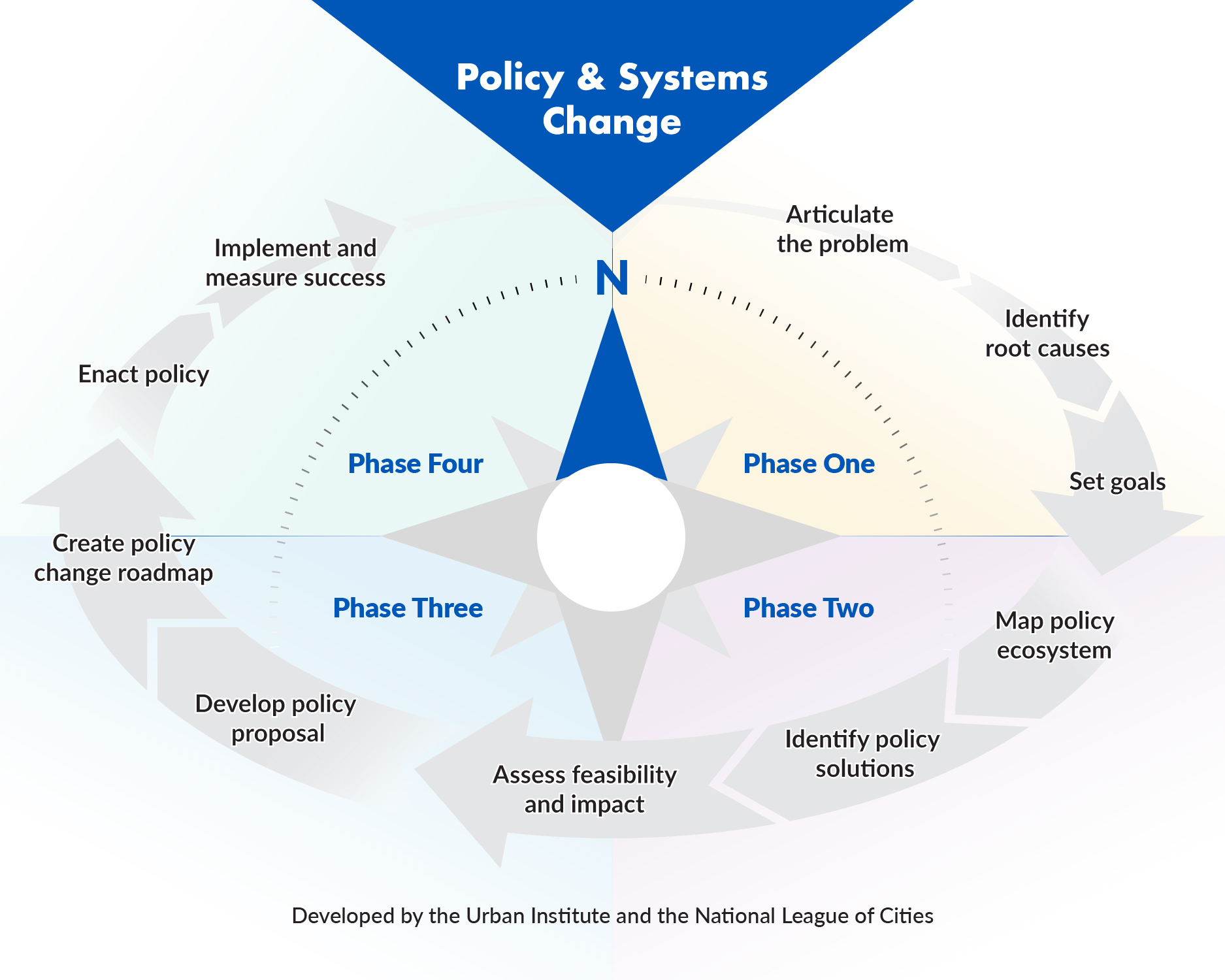
Our Compass training and technical assistance has four phases, with the true north of advancing meaningful, sustainable policy and systems change.
Phase One
The steps in this phase help local leaders understand the challenge they have identified in their community:
- Articulate the problem you aim to address and describe how systems need to change to support people—not what people need to do to access systems.
- Conduct root cause analyses to understand what’s driving the problem, rather than just seeking to understand its symptoms.
- Set goals or outcomes you would expect to see if you addressed root causes.
Phases Two and Three
The steps in these phases blend together, helping local leaders identify policy solutions and begin planning for them:
- Map the policy ecosystem, including key stakeholders (e.g., local officials, community groups, and business and civic leaders), windows of opportunity, and community perspectives that may influence your actions.
- Identify policy solutions and systems changes.
- Assess the feasibility and potential impact of different policies and systems changes using data, landscape scans, research, and insights from key stakeholders.
- Develop a policy and systems change proposal that articulates your rationale for action, including the root causes to be addressed, why previous efforts have been unsuccessful, and why now is the right time for action.
- Create road maps for policy and systems change that lay out the steps needed for implementation and the milestones you will use to measure steps toward adoption.
Phase Four
The steps in this phase center on implementation and evaluation:
- Enact the policy and systems change.
- Measure progress toward policy and systems changes and population impacts.
