
Participatory research can drive meaningful culture changes in prisons, according to a new report released today by the Urban Institute’s Justice and Safety Division. The report is the first in a final series of publications planned for 2025, concluding the Prison Research and Innovation Initiative (PRII), a six-year effort engaging incarcerated people and corrections staff in research, testing reforms, and conducting surveys inside correctional facilities across five states.
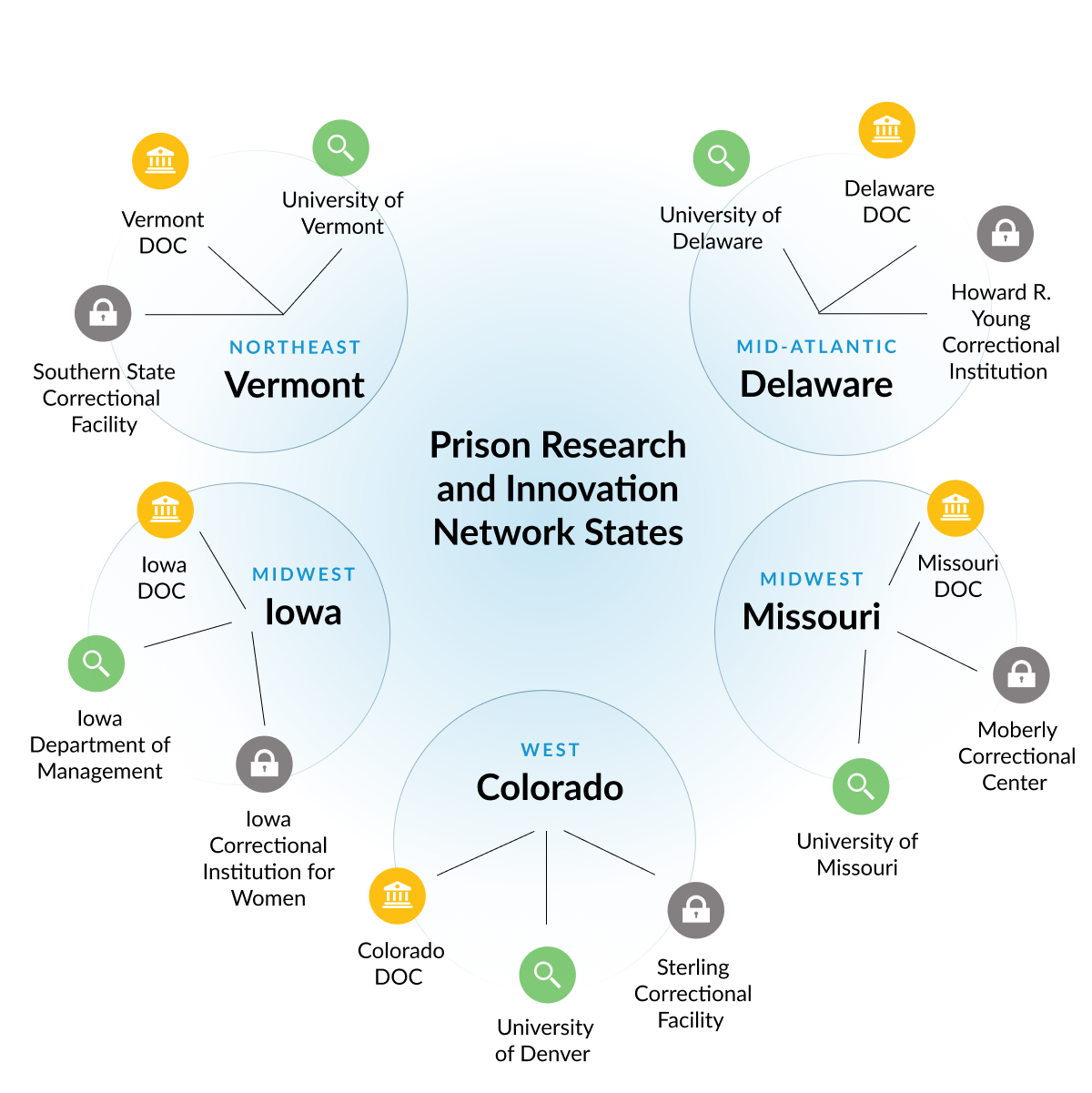
The report explores PRII’s participatory research approach, through which incarcerated people and corrections staff codesigned surveys, identified challenges, and tested solutions to improve living and working conditions for incarcerated people and corrections staff. Launched in 2019 with support from Arnold Ventures, PRII established the Prison Research and Innovation Network (PRIN), a network of five pilot sites in Colorado, Delaware, Iowa, Missouri, and Vermont. Each site partnered with local research partners and created advisory councils to elevate the voices of people living and working behind bars.
“Our research partners worked hard to develop relationships with people living and working in prisons to help build trust in facilities often marked by distrust and showed that even small changes could shift the tone inside,” said David Pitts, vice president of Urban’s Justice and Safety Division. “PRII shows that even in highly constrained environments, it’s possible to open dialogue and shift prison culture.”
Upcoming PRII Publications
Upcoming publications in this final series will analyze the results of climate surveys of incarcerated people and corrections staff, exploring trends in their attitudes toward working and living conditions inside prison. Sign up for Urban’s justice and safety newsletter and visit Urban’s new prison research microsite to access reports from PRII and upcoming releases through the end of 2025.
PRII’s Notable Reforms and Innovations Tested
In addition to surveying the attitudes of people living and working inside prisons, PRII piloted site-specific innovations shaped by advisory councils made up of both corrections staff and incarcerated individuals:
- Colorado expanded its peer-led mental health counseling and revamped its communication strategies with staff.
- Delaware introduced a commercial driver’s license program and refreshed its grievance system.
- Iowa developed a parole preparation course alongside a vocational training academy.
- Missouri established a reentry center for incarcerated people and a decompression space for staff.
- Vermont created a “normalization” unit and a coffee shop run by incarcerated people.
Recommendations for a Participatory Approach to Prison Research
The report outlines and explains the following recommendations for approaching participatory research and innovations in correctional settings:
- Secure buy-in at all levels from corrections leaders, frontline staff, and incarcerated people.
- Treat facility leadership as a stakeholder group with distinct priorities, needs, and motivations.
- Recognize and plan for an “us versus them” mindset, and plan to create success outcomes shared by both incarcerated people and corrections staff.
- Identify a respected champion on the ground who can navigate bureaucracy and drive reform.
- Make participation easy, especially for overworked staff.
- Use different research methods to reduce research fatigue. Mixing interviews, focus groups, and informal feedback loops keeps participants engaged.
- Focus on small, visible wins early on in resource-strained environments, as even modest improvements can signal that change is possible and worth investment.
Stories of PRII’s Impact
The report includes quotes from interviews with corrections staff, incarcerated people, and research partners that underscore the initiative’s impact on prison culture:
- “We’re the ones that live here. We know what’s going on behind the walls. Who better to give feedback than the ones that live here?” -incarcerated research participant
- “The biggest success is PRIN giving us the permission. It showed people that we can do better. It created space for conversations that simply didn’t happen before.” —steering committee member
- “This is the first time we felt like our voices really mattered.” —incarcerated research participant reflecting on involvement in research design
- “They were asking us what questions we should put in the survey. That’s different.”— incarcerated research participant on codeveloping research tools with staff and researchers
- “We all want the same things—safety, dignity, a better life. This helped show that.” —incarcerated research participant
About Urban’s Justice and Safety Division
The Urban Institute’s Justice and Safety Division works to inform solutions to crime and safety. By conducting rigorous research and policy analysis, we provide the best data, guidance, training, and technical assistance to our partners that share a mission to promote functional and fair justice systems. For more evidence on justice and safety, visit https://www.urban.org/research-and-evidence/justice-and-safety.
About the Urban Institute
The Urban Institute is a nonprofit research organization founded on one simple idea: To improve lives and strengthen communities, we need practices and policies that work. For more than 50 years, that has been our charge. By equipping changemakers with evidence and solutions, together we can create a future where every person and community has the opportunity and power to thrive.
