Shopworks Architecture (Shopworks) is a design firm that uses trauma-informed principles in their property design, project management, and service delivery models. As they shared at the roundtable, over the course of the design and development of 45 properties using trauma-informed principles—and more than 1,500 interviews with residents and stakeholders to learn about their needs—Shopworks has developed and continually refined a framework of core trauma-informed design principles that guide their work: comfort, connection, and choice, with safety at the center. Shopworks emphasizes that safety—including residents’ perceptions of both physical and psychological safety—is the central tenant of their trauma-informed design. However, Shopworks noted that all trauma-informed principles must be embedded in the design of, management of, and services provided in their properties.
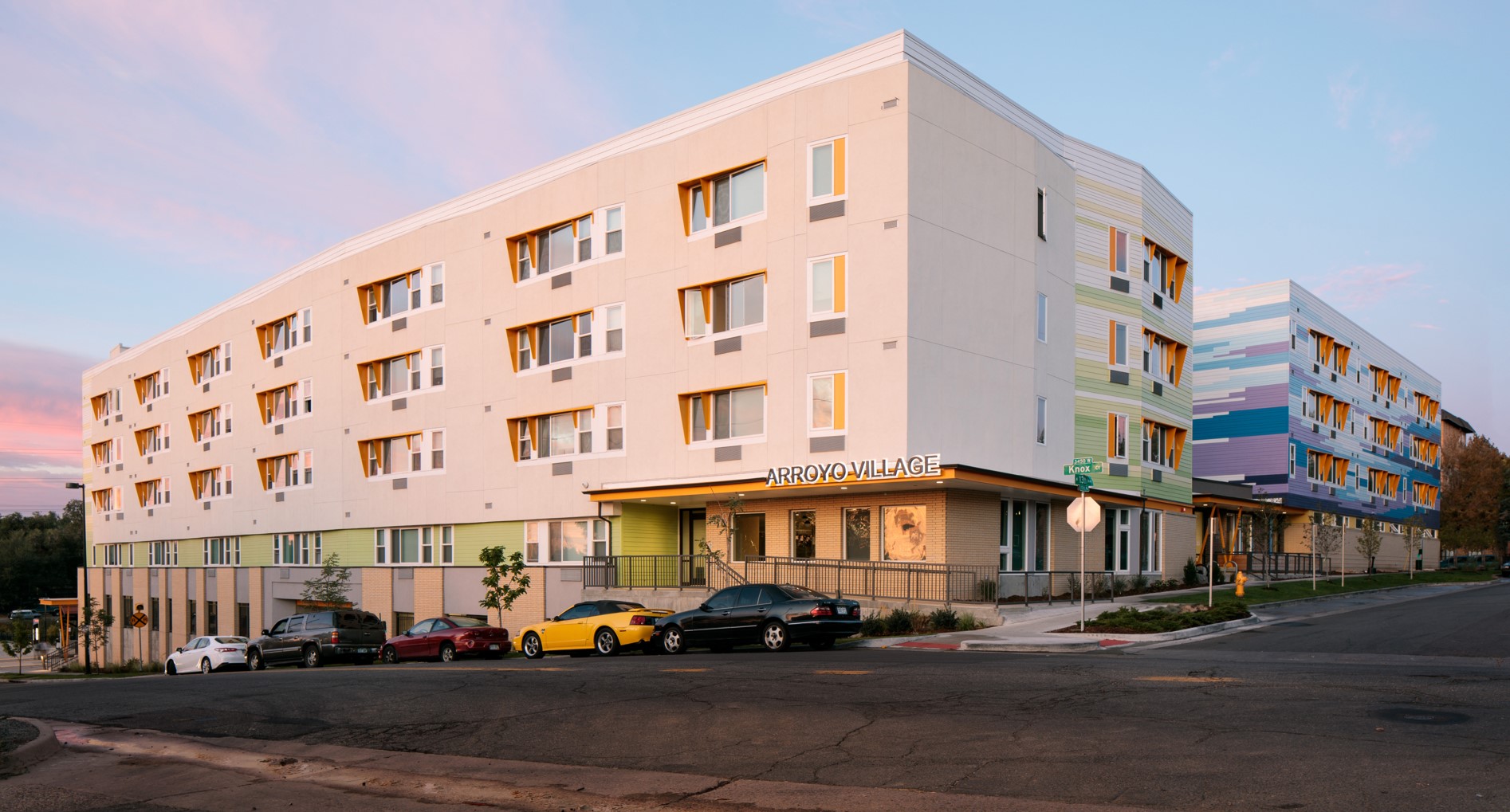
Arroyo Village was Shopworks’ first property designed using trauma-informed approaches and reflects Shopworks’ priority of safety and comfort for residents. In collaboration with the Delores Project, Shopworks designed a complex of supportive housing that includes a 60-bed homeless shelter, affordable workforce housing, permanent supportive housing, and embedded services for employment and housing security supports. Based on input from community members who would stay in the shelter, the property includes computer workstations, rocking chairs meant for self-soothing, locking dorm lockers, soft lighting, high windows, and a staff office located in the dorm to provide a greater sense of security when guests are sleeping.
Shopworks’ laundry spa at their Elisabetta property is an example of how the design firm implemented user input into their building design. Shopworks shared that their staff had heard that residents had experienced challenges and trauma around laundry—including facing unaffordable costs at laundromats, giving their few possessions to a laundry service where they could be damaged or lost, and experiencing frequent theft of their belongings. As a result, residents wanted to remain in the space where they did their laundry. Rather than relegate the laundry room to a dark basement, Shopworks created an intentional, sunny space with cozy seating, areas for folding clothing, and television and books for entertainment so as to provide residents a comfortable and safe laundry space and experience.
Shopworks presented some of the best practices they’d developed to promote trauma-informed principles in both building design and operations. For example, to promote a sense of safety for residents, they rely on design tools such as good lighting, “gentle transitions” between spaces, and intentional choices for materials that modulate sensory input, such as carpeting hallway floors to reduce the sound of footsteps. One recurring theme from their research and interviews with building users is the importance of sightlines between staff areas and resident common spaces like fitness areas, which help individuals feel comfortable and secure using these spaces. Staffing and service programming in buildings shapes how residents use and experience the spaces and design.
Shopworks also emphasized the importance of incorporating community voices in the beginning stages of a project. Making major decisions and modifications later in the construction process can be costly and time-consuming. Making community-driven decisions earlier in the design process does not incur higher costs; instead, it shifts the investment of time and resources to the beginning stage.
Shopworks also highlighted their advocacy efforts for the adoption of trauma-informed design in policy and practice. In their home state of Colorado, they were able to bolster the Colorado Division of Housing’s language in the voucher applications for housing providers; applications now ask how the housing provider has incorporated tenant input and trauma-informed design processes into their proposal. Shopworks also helped secure an additional requirement for Low-Income Housing Tax Credit proposals to the Colorado Housing and Finance Authority that asks applicants to describe how they will implement best practices including trauma-informed design. In addition to policy advocacy, Shopworks has helped other organizations adopt trauma-informed housing principles by sharing their framework and manuals that present their trauma-informed design principles, experiences, and lessons learned.
Next section: The Kelsey